
Issue #494
Wednesday, October 21, 2026
Safety or Trust?
The Language of Safety
Part 2
by Madonna Gott
Trust Is Not the Opposite of Safety
If safety is the condition we create around someone, trust is the relationship they develop within themselves.
That distinction matters.
Because when we talk about trusting the body, it can sound almost deceptively simple.
Listen to your body.
Trust what you feel.
Do what feels right.
But genuine trust isn’t the same as doing whatever feels comfortable.
Sometimes what feels familiar feels safe because we’ve become very good at avoiding anything that asks us to adapt. Sometimes discomfort is a warning. Sometimes it is simply information. A movement can feel unfamiliar because we’ve never explored it before. We can also want to stop because we’re uncertain, rather than because something is actually wrong.
So trust can’t simply mean believing every sensation.
It means being able to notice what is happening without immediately needing to control it. It means learning to distinguish between discomfort and danger, recognising when something is changing, adjusting when it needs adjusting, and knowing when to continue, pause or stop.
That kind of trust isn’t given to us by someone else.
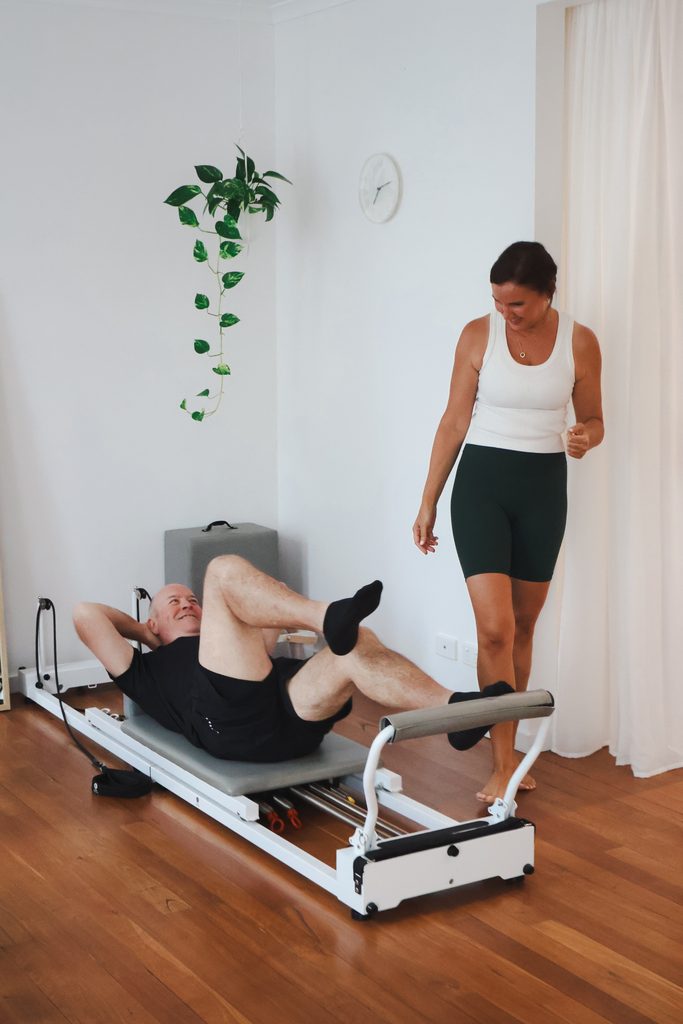
It develops through experience.
It develops when we are allowed to encounter our bodies rather than constantly being told what our bodies are doing. When we have enough information to make sense of what we feel. When we’re given opportunities to explore without being abandoned to figure everything out alone.
And, importantly, when we discover through experience that we can respond.
This is where the role of the teacher matters.
Creating an environment where someone can explore doesn’t mean removing all uncertainty or stepping back from responsibility. It means providing enough information, support and appropriate challenge for a person to begin developing their own relationship with movement.
The aim isn’t to leave someone alone with their uncertainty.
It is to give them enough experience to discover that uncertainty is something they can meet.
Because trust isn’t the absence of uncertainty.
It is the growing knowledge that, whatever happens, I can respond.
Trust Requires Capacity
If we want people to trust themselves, we can’t simply tell them to do it.
We have to give them experiences that allow that trust to develop.
A person begins to trust their body when they discover that they can notice something and respond to it.
They move into a new range and find that they can adjust.
They encounter an unfamiliar sensation and learn to stay curious rather than immediately becoming afraid.
They lose their balance slightly and discover that they can reorganise.
Something doesn’t feel right and they realise they can change what they’re doing.
These experiences matter because each one adds something.
Not certainty.
Capacity.
And capacity changes our relationship with uncertainty.
When capacity is low, uncertainty can feel like danger. We need someone else to tell us what to do because we don’t yet have enough information, experience or confidence to make the decision ourselves.

As capacity develops, something changes.
We don’t necessarily become more certain about what will happen.
We become more confident that we can meet what happens.
That distinction is important.
Movement education can’t realistically prepare someone for every movement, sensation or circumstance they might encounter outside the studio. There are simply too many variables.
Bodies change.
Environments change.
Life changes.
Someone can learn how to perform a movement beautifully in a controlled room and still feel completely lost when their circumstances change.
They might step awkwardly off a curb. Pick up something heavier than expected. Wake up stiff. Feel pain somewhere they haven’t felt it before. Try something they’ve never tried.
No one is there to tell them what to do next.
This is where capacity matters more than certainty.
The goal isn’t to make someone certain about every movement they will ever encounter. It is to help them become more capable of responding when something is unfamiliar.
And that changes the kind of confidence we are trying to build.
It’s not:
“I know exactly what my body can do.”
It’s closer to:
“I know how to pay attention.”
“I know how to respond.”
“I know I can change course.”
That is a very different kind of confidence.
It doesn’t depend on knowing everything in advance.
It depends on knowing that you can meet what you don’t know.
What Are We Actually Teaching?
This is where I think movement education becomes much more interesting.
If we focus entirely on keeping people within what we already know to be safe, we can become very good at reducing uncertainty.
But reducing uncertainty isn’t the same as developing someone’s ability to navigate it.
There will always be something outside the lesson plan.
There will always be a movement we haven’t practised, a surface we haven’t encountered, a day when the body feels different, a circumstance we couldn’t have predicted.
We can’t teach someone every possible response.
We can help them become someone who can respond.
That means the value of movement education isn’t only in the movements a person learns.
It is also in what they learn about themselves while moving.
Can I notice a change?
Can I stay present when something feels unfamiliar?
Can I make an adjustment?
Can I stop without feeling that I’ve failed?
Can I continue without ignoring what I’m experiencing?
Can I trust myself enough to make a decision?
These are not skills that can be handed over by an instructor. They have to be experienced.
And that is why I don’t think trust should be treated as the opposite of safety.
Safety gives us enough support to explore.
Exploration gives us experience.
Experience develops capacity.
And capacity gives us something far more useful than certainty.
It gives us the growing knowledge that we can meet ourselves when things change.
Maybe that is what trust actually looks like.
Not believing that nothing will go wrong.
Not believing that the body is invulnerable.
Not believing that every sensation should be ignored.
Simply knowing that when something changes, I am still here.
I can notice it.
I can respond to it.
I can change course.
I don’t have to abandon myself.
That, to me, is a much more useful definition of safety.
Because eventually, the person leaves the room.
And when they do, the most valuable thing we can have given them is not our protection.
It is themselves.
Madonna Gott is an Australian Pilates instructor, movement educator, author of The
Dual Helix of Healing, and founder of the SomaFlow Method™. Through SomaFlow,
she offers practitioner education, training pathways and studio workshops for
movement professionals across Australia.