
Issue #496
Wednesday, November 11, 2026
The Practice Behind Powerful Teaching
by Tabatha Russell
Pilates instructors spend a lot of time around Pilates. We teach it, demonstrate it, cue it, and plan classes around it. We take continuing education, post about it, debate versions of exercises, and talk endlessly about programming. However, being around the work is not the same as being in the work.
One of the habits I believe the profession has to protect against is the idea that once you become the teacher, your own practice becomes optional. It is easy to understand how that happens: teaching is demanding. Many instructors are working back-to-back sessions, managing studios, building businesses, raising families, and trying to keep up with the administrative side of a profession that looks much simpler from the outside. Still, I don’t think personal practice is something we can quietly remove from the job and expect the teaching to remain the same.
Pilates is embodied work and, at some point, the teacher has to continue experiencing it. You may know the order of an exercise, memorize the setup, understand the anatomy and the intended movement. You can repeat excellent cues that came from an excellent teacher. That is not the same as feeling the work in your own body, though.
The body gives you information that a manual cannot. You feel where you compensate, notice where a transition breaks down, discover that an exercise you have taught for years suddenly feels different. You realize that something you have been cueing one way might make more sense another way. That experience changes how you teach. Not because your body becomes the standard, but because you have a deeper reference point.
The problem begins when a script becomes the teaching. A script cannot see the client in front of you or notice that the person is gripping through the feet, holding their breath, losing organization through the pelvis, or becoming more confused with every additional cue. The script cannot decide that the exercise you planned is not the exercise they need. The teacher has to do that.
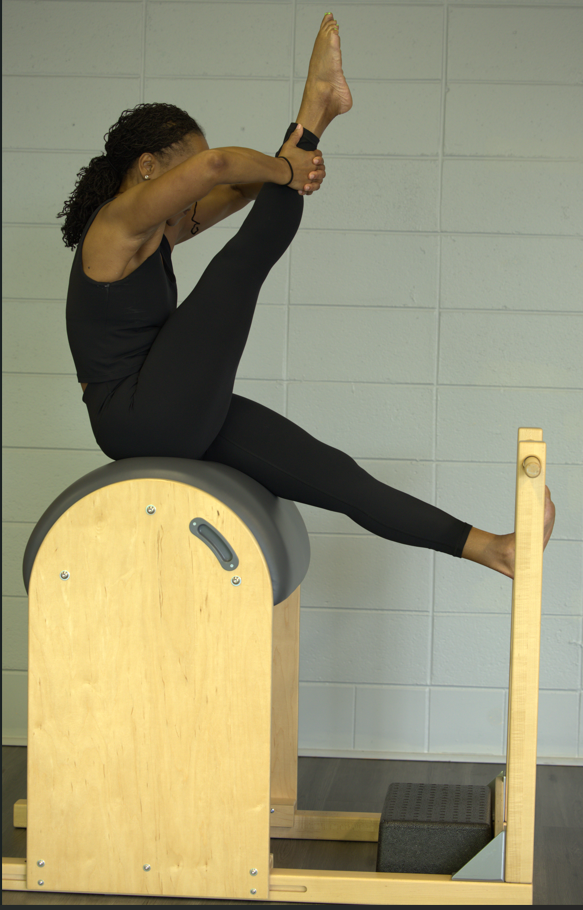
Yet, there is a real risk in experience: the longer we teach, the easier it can become to run on familiarity. We know the sequence, the transitions, the instructions. Efficiency is useful, but autopilot is not. Without continued practice, a familiar language can become an inherited language. We repeat a cue because we have said it a thousand times. We keep a sequence because it works well enough. We stop investigating exercises we believe we already know. That is when teaching can become technically correct and still feel disconnected.
Personal practice interrupts that. It reminds you that Pilates is not a collection of exercises to deliver but a system to continue studying. That becomes clearer when you practice across the apparatus. An exercise on the Mat starts to make more sense when you recognize how the Reformer supports the same idea. The Chair challenges something the Tower helped organize. A basic movement begins to reveal itself as preparation for work you once considered unrelated. Those relationships are harder to understand if your engagement with Pilates happens mostly from the teaching side of the room.
The same is true of programming. A sequence can look excellent on paper and feel completely different in the body. You may discover that the transition is awkward, the pacing is off, or the progression makes sense intellectually but not physically. You may realize that what you thought was preparation actually demands more preparation. That is useful information and it is one reason I think teachers should move through the work they are asking other people to do. Not because every instructor needs to perform every advanced exercise or because a teacher’s physical ability determines their credibility, but because personal practice is not performance: it is inquiry.
Bodies change (our included). We age. We get injured. We recover. We gain strength. We lose mobility. We have days where everything feels organized and days where nothing does. That should make us better teachers. It should make us less rigid, remind us why one cue does not work for everyone and why a client may need a different entry point than the one we originally planned. It should also keep us humble. One of the most useful experiences a skilled teacher can have is returning to something basic and realizing there is still more to learn from it. That is not regression; it is depth.
The industry is growing quickly, and with that growth comes pressure to produce more classes, more instructors, more programming, and more content. None of that is inherently bad, but speed can create shortcuts. One of those shortcuts is believing that knowing the repertoire is the same as understanding the method. Another is believing that teaching Pilates all day counts as practicing Pilates. It does not. Teaching is teaching, practice is practice, and teachers still need teachers too.
None of this requires perfect practice or an hour every day. Fifteen intentional minutes count. Revisiting one series counts. Getting on the apparatus and working through the thing you have been teaching counts. Taking class counts. Being taught counts. What matters is that we do not allow the role of teacher to separate us from the experience of being a student. Because that separation shows up eventually: in the cueing, the programming, in how quickly we can adapt, or in whether we are responding to the body in front of us or simply delivering the class we already know how to teach.
Personal practice is not about proving that we can still do Pilates, but about continuing to understand what we are asking other people to do. That is a professional responsibility and, in my view, it is one of the things that keeps teaching alive. You cannot teach what you do not continue to practice.
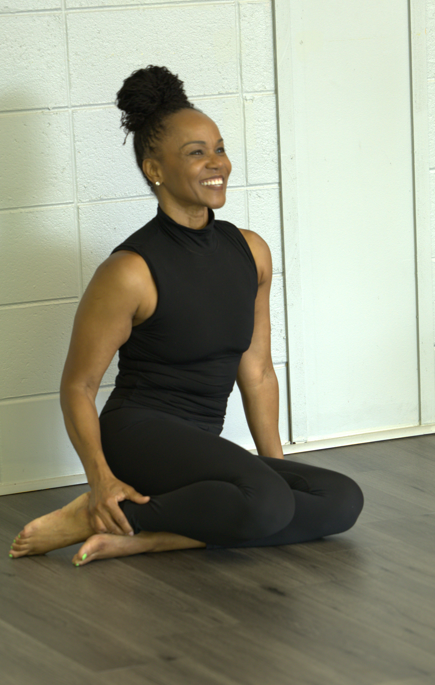
Tabatha Russell is a 34-year veteran Pilates practitioner, teacher, mentor, and industry leader. She is the founder of tabPILATES & Bodyworks Center, a community-based Pilates studio she has owned and operated for 18 years, with a focus on making high-quality Pilates instruction, teacher training, and mentorship meaningful and relevant to the community it serves.
Her work centers on developing thoughtful, skilled Pilates professionals while honoring the traditional method and helping teachers translate the work to the individual body in front of them. Tabatha also serves on the Board of the National Pilates Certification Program (NPCP) and her mentorship work focuses on developing confident teachers and expanding pathways to professional growth and leadership within the Pilates industry
Follow: @tabathalrussell | @tabpilates