
Issue #464
Wednesday, June 25, 2025
The Foot Corrector!
by Gail Giovanniello
Hello instructors and movement specialists! My favorite season in Summer! (If it ever gets to NY this year ;). In my studio this month, we are “feet focused”. For one, Life is better in flip flops – with arch support of course! Secondly, Summer shoes may not be as supportive so I want to encourage clients to strengthen the feet, ankle, toes so that they can wear Summer sandals etc., …
Many Pilates instructors begin practicing Pilates due to an injury and learn how fabulous the method is for the entire body. I launched a career in Pilates while I was also dancing professionally. My dance career, after twenty active years, ended with a foot injury. It was a small drop and split in the third metatarsal ligament. My doctor called is a “Y-ligament”. It is nearly impossible to be a NYC Modern dancer with this injury. I started outdoor cycling during my hiatus and never returned to dance. It was time to get outdoors!
My options for my injury were to have surgery, which would leave the toe quite stiff or to strengthen the foot and hope for the best. I had been teaching Pilates for several years already and decided to try to strengthen the foot! It was around this time, while working with Deborah Lessen, that she began to teach me all of her footwork secrets. From Doming, to articulation with and without a thera-band, to her amazing Standing Footbar, Footwork on the Reformer, Cadillac, The DLP High Back Chair and the Foot Corrector, the exercises saved me from surgery. It is through this experience that I began to include and emphasize to people the importance of strengthening the sole, metatarsal heads and to distribute the weight evenly to the ball, the outside edge and the heel of the foot.
As with most Pilates exercises, I wanted to learn what was behind the prehensile position. What I gathered, is that is much more than wrapping the toes around a bar. I learned to articulate all of the muscles and tendons of the foot, to stand on the outside edge, dome the arch and articulate the foot and ankle within my gait. I also learned that Joseph Pilates understood the architecture of the foot with great detail, given the foot positions and exercises on all of the above apparatus. All of them are intended to lift the arch and to encourage proper weight-bearing stance for practice and muscle repatterning. I should also mention that I worked with a Physical Therapist on my gait and this has changed my pain to nearly zero in my low back and hip.
The major point for me, is that I fear to have pain in my feet as I age because I want to remain active and without feet, activity will diminish a great deal. It is in my best interest to continue to strengthen my feet daily to avoid any further metatarsal drops, which can cause hammer toes, dropped arches, which can cause the ligaments to pull away and become very painful.
While I want to encourage Doming for all footwork, I often experience instructors using the Foot Corrector with a lot of squeaky noises and no real depth in the exercises. I see press and release as if this would strengthen the ankle joint as a hinge joint.
The ankle is a hinged synovial joint, formed by the tibia, fibula and talus bones and it has a deep glide when dorsiflexed. The foot has hundreds of tendons and muscles, 33 joints and 26 bones. The foot is complex and deserves more attention within a Pilates practice. The focused detail today is on the Foot Corrector and some of this can directly translate to the other footbars on Pilates’ apparatus.
First, one can see that the Foot Corrector shape is the shape of a measuring instrument used to measure one’s foot for a proper shoe fit. Because our feet change with age, we should probable measure periodically to ensure proper shoe fit. However, the design is so telling of Joe’s knack for knowledge and detail.
In the video, I demonstrate two exercises.
The first, the metatarsals dome over the foot plate of the Foot Corrector, the heal resting on the wooden platform. Remember 33 joints, so I encourage getting into position and holding with a bit of active stabilization to find some space between the bones.
To move the plate, the focus is about doming the foot to move it down, without noise. (No different than refraining from banging the Reformer carriage) and doming the foot back up, maintaining all of the weighted parts.
Try keeping the weight on the outside edge of the foot and distributed evenly from big toe to little toe, and the heel reaches down to anchor away from the calf.
The standing leg is also important and should be grounded so that the entire body (once again) plays a role in one simple exercise.
The exercise reverses and the push is from the heel on top of the foot plate. Rest the heel with the same active set up. The same energy applies. Instead of driving down, the heel (the calcaneus bone) can be cued to reach away from the calf, to create the pedal push, while maintaining even weight on the metatarsal heads. This allows all the muscles to activate and for the movement to be controlled. You can actually see the arch fan over to the lateral side of the foot, creating the arc of the foot. In other words, like all of the Pilates’ exercises, meet the resistance of the spring, engage before you go, stabilize before mobilizing.
My feet would be in agony without working this type of articulation. I have sent over an example of me doing the foot exercises on the Foot Corrector. I also have the foot exercises and a DLP series on the DLP Standing Footbar on Youtube. @mindyourbodynyc. You can find the Doming exercises from physical therapists on Youtube as well.
I hope that you find a new and grounded connection to your feet to share with your clients and loved ones! My Foot Corrector currently resides at my Mother’s because her arch has dropped and I am helping her, along with medical treatment.
Happy footing!!
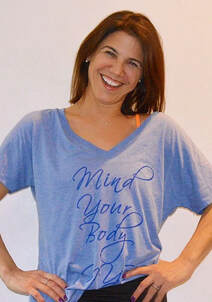
Gail is a fourth-generation descendent teacher of the Pilates method, receiving wisdom handed down carefully and specifically from past master to present master and keeping the continuity and exactness of the method intact. She has trained for over fifteen years with Deborah Lessen, a teaching disciple of another Joseph Pilates direct-line student, Carola Trier. Gail also studied with Kelly Kane, founder of Core Integration, now Kinected, who incorporated anatomical knowledge to improve strength and stability. Gail believes in continuing the traditions of physical fitness set forth by Joseph Pilates in the 1950′s by receiving Heritage Training from Cara Reeser, a disciple of Kathy Stanford Grant, who studied directly with Joseph Pilates. Gail remains a student of Deborah Lessen and assists in her trainings.
In her studio and her teachings, Gail promotes focus and attention to detail along with an in-depth comprehension of anatomy for movement. Her extensive background, as well as on-going Pilates continued education, allows her to assist people with a broad range of physical concerns: post-injury rehabilitation, sports conditioning, and prenatal exercise, as well as posture and overall muscle toning.
Gail is certified by the PMA® and is also the Director of Mind Your Body Pilates Teacher Training, which offers comprehensive Pilates educational training in Pre-Pilates, as well as on all Pilates apparatus. Gail also holds a Level II in the GYROTONIC® Expansions system and Jump Stretch Board. She compliments fitness with trainings in massage and Thai Body Yoga.
Gail offers profound and overall attention, interest, and concern for all her clients, and gives tireless care to the upkeep of her two studio locations. As a result, Mind Your Body was recently awarded Mind Body’s (National Scheduling platform) Visionary Award for 2018 demonstrating outstanding studio growth.