
Issue #454
Wednesday, March 19, 2025
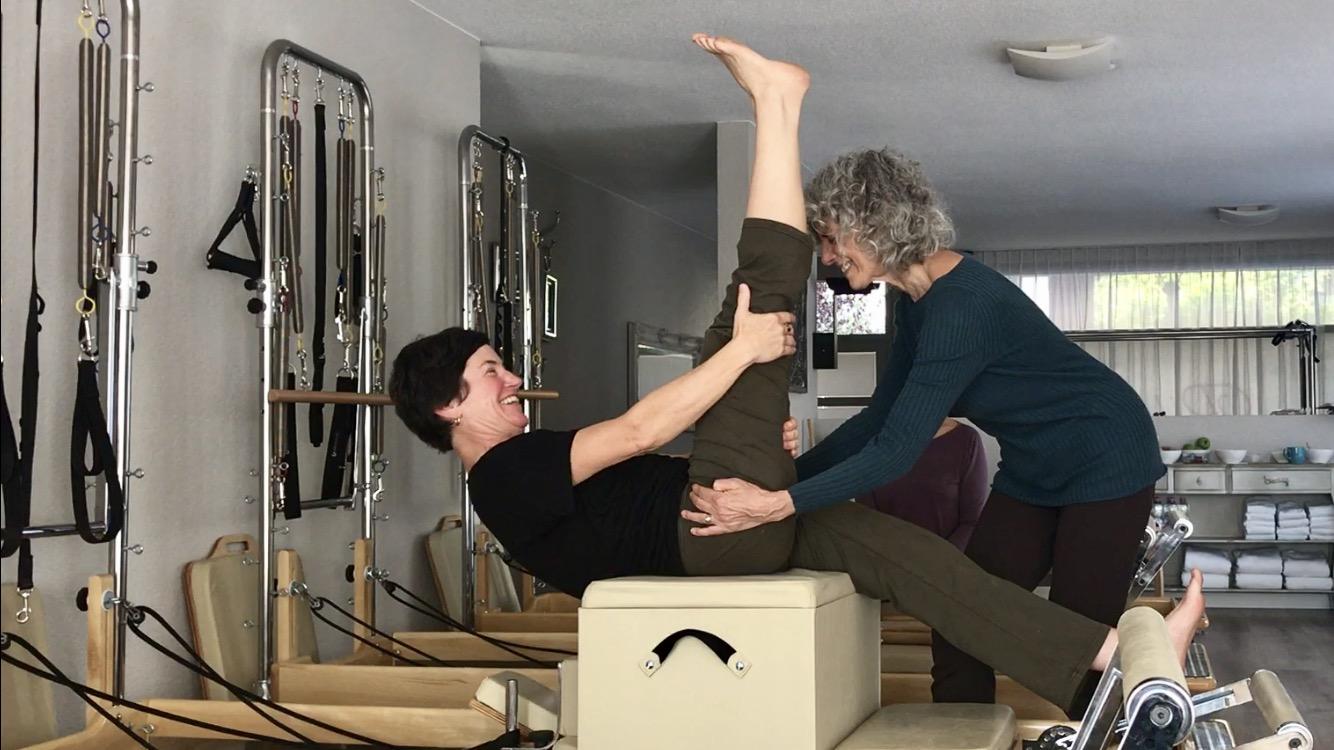
How Embodiment Makes Pilates “Holistic” by Wendy LeBlanc-Arbuckle
As one of the Pilates teachers who received a cease and desist call in the early 90’s which led to being involved in the Class Action suit that freed up the Pilates name in 2000, it was interesting to witness the conversations about “classical and contemporary” Pilates that emerged after the trademark cancellation.
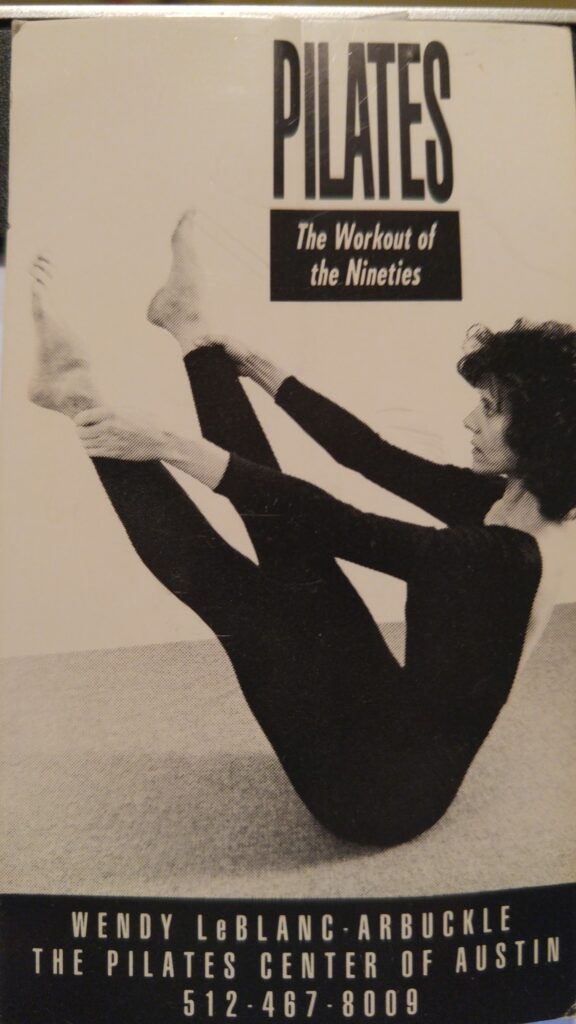
(My first business card)
The Pilates industry was launched at that time, even though most people could not spell Pilates, let alone know its roots. And there was a front and back to opening the door to anyone being able to use the name “Pilates”, as there were no teaching standards till we established the Pilates Method Alliance (PMA). It was an honor to be on the original role delineation committee with 11 other colleagues, establishing the first third party credential exam in 2005. It was a beginning, as we established the basic standards for a certified professional in our field, which is now the NCPT credential.
At our first gathering of the PMA in Miami, Kathy Grant was on a panel, and she was asked “what do you teach, classical or contemporary?” Kathy looked at the person quizzically and said “classical or contemporary, what is that? I just do what I do”. That changed everything for me, as I saw what was important was not a right/wrong approach, but how are we meeting the person where they are.
My journey in Pilates began in 1991, studying with Romana Kryzanowska at TPC, when she was creating the first teacher training program for Amy and Rachel, and then I continued studies with Romana at Drago’s in NY, Kathy Grant, Ron Fletcher, Mary Bowen and Lolita san Miguel to explore how they each taught their version of Joseph Pilates’ legacy. What was important when I began my Pilates studies, is that I “paused” my 20 year yoga practice in order to experience “what is Pilates?”
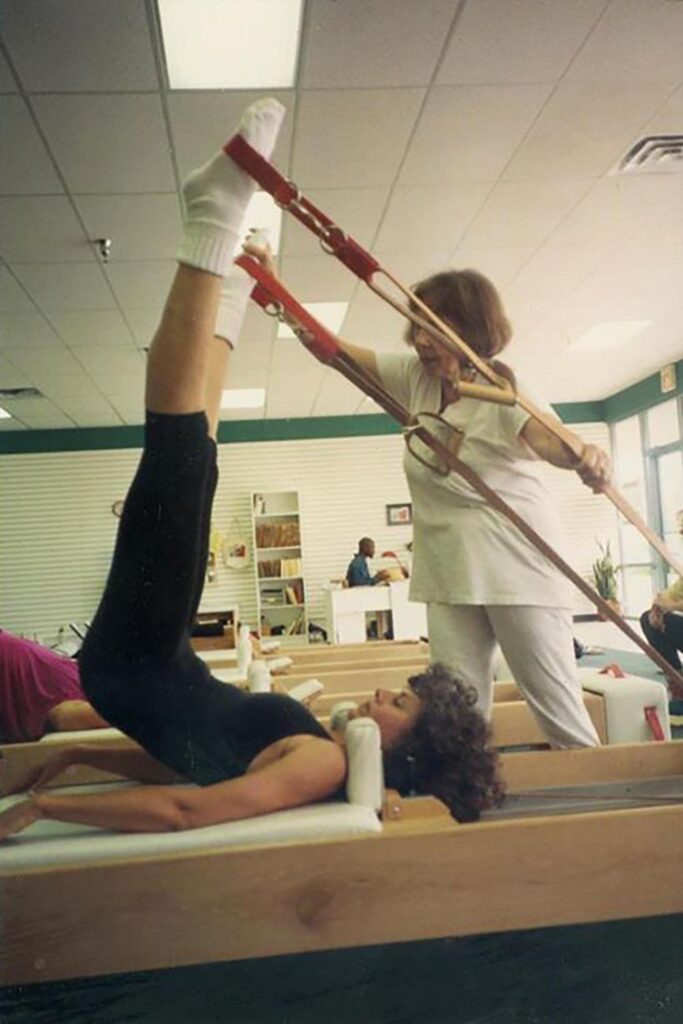
( Teacher Training with Romana)
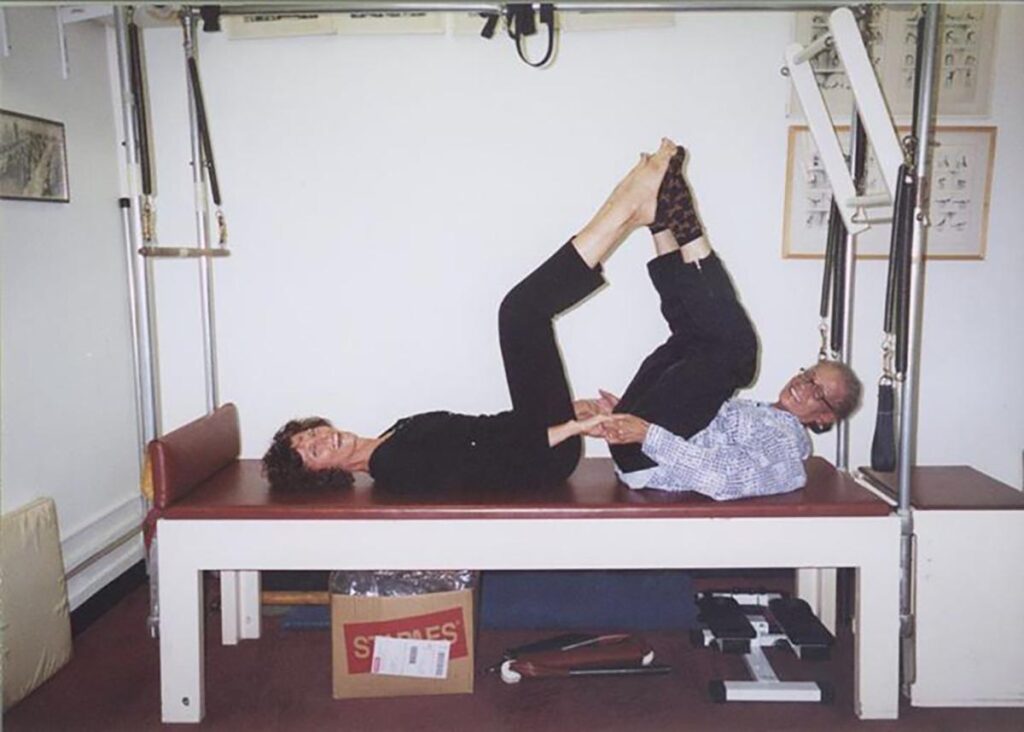
(Studying with Kathy Grant at NYU)
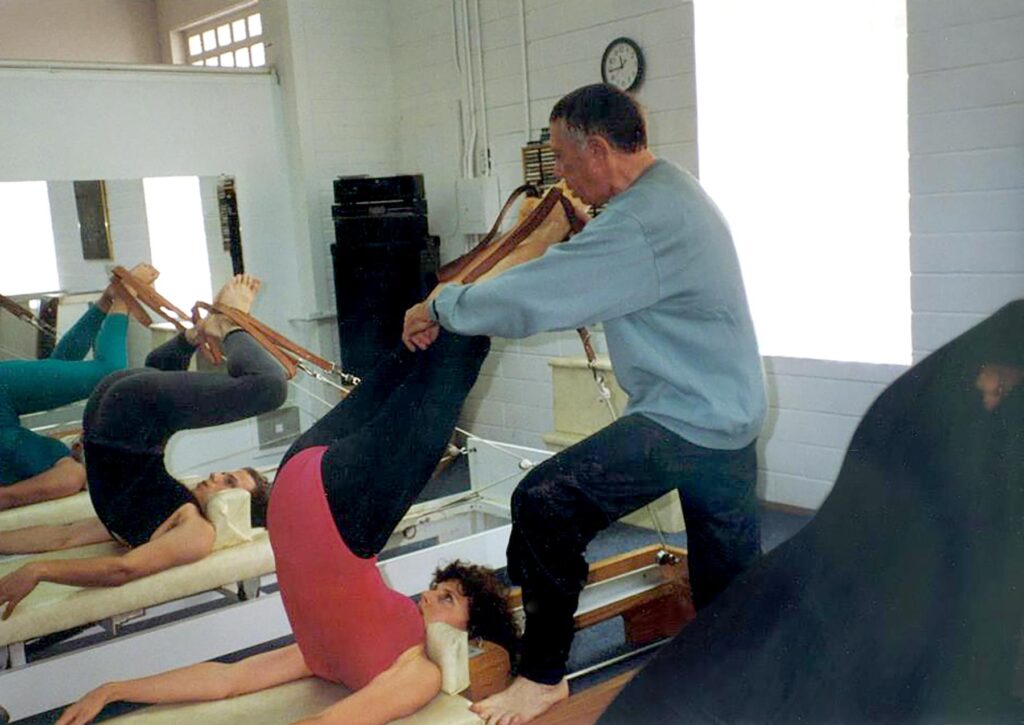
(Studying with Ron Fletcher)
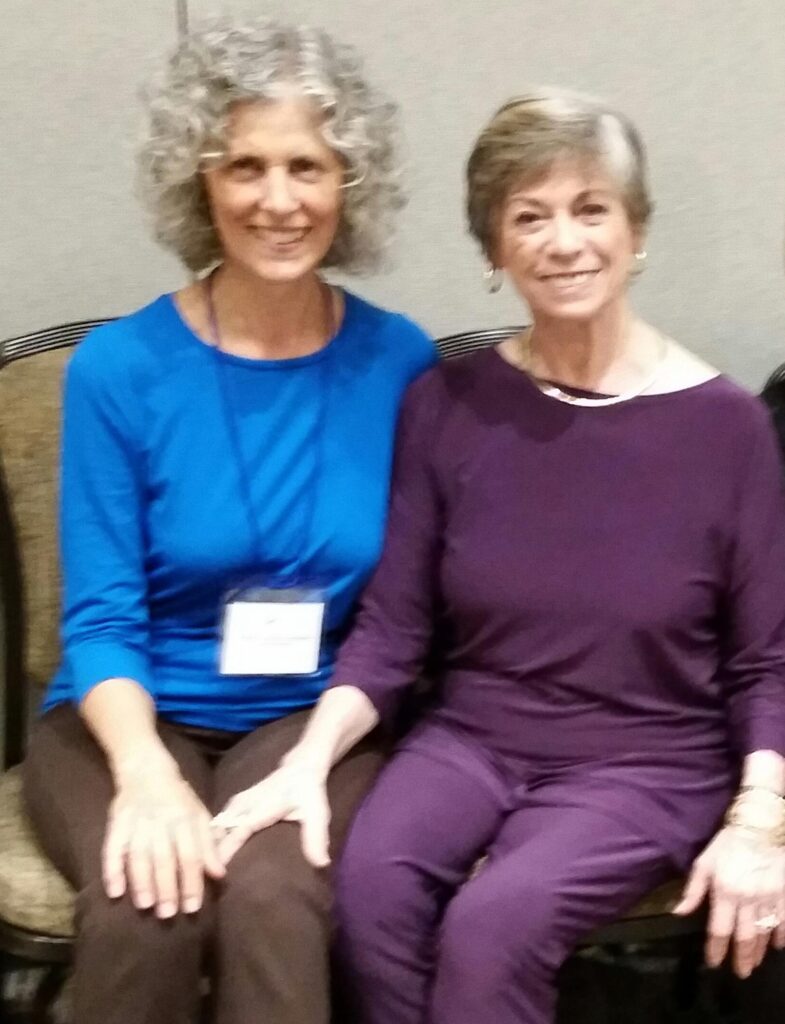
(Studying with Lolita san Miguel)
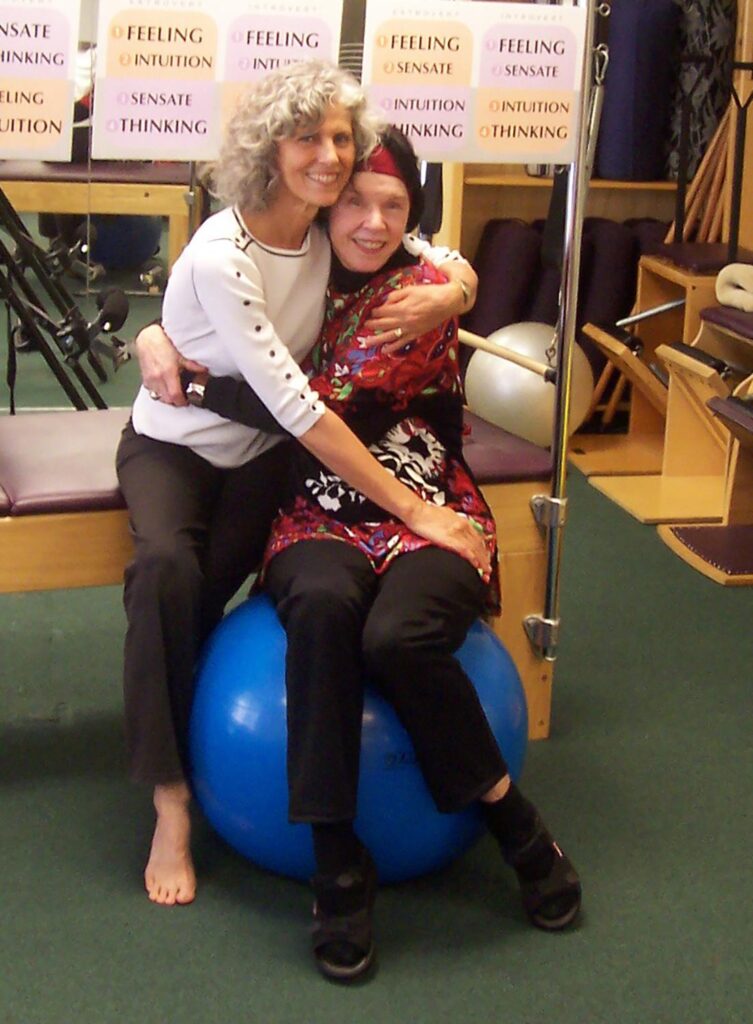
(Studying with Mary Bowen)
Romana was an inspiring teacher who taught with rhythm and precision. She was a ballet dancer, so the “transition” from one movement to another was just as important as the exercises. What I became aware of is that Romana, a ballet dancer taught very differently than Joseph Pilates, who was a boxer. Kathy Grant also taught very differently than Romana. Romana said that balls, therabands, other props, were “not Pilates”. That same week, I would take lessons with Kathy at her studio at NYU and she was the “prop Queen” , using balls, therabands, straps, whatever she felt would give you the sensation you needed.
A few years after opening Pilates Center of Austin in 1993, as the first Pilates studio in Austin, I noticed one day that my body “felt” very different than I had in 20 years of yoga. I didn’t have words for the feeling at the time, just that I felt very “held” in my center.
As I explored the feeling with other colleagues, I realized that I was “over-stabilizing” my abdominals with the “navel to spine cue”. I was a super flexible body in yoga, so I had see-sawed from “over-stretching” in yoga to over-stabilizing in Pilates.
Then, when I met a Structural Integration bodyworker, who introduced me to Ida Rolf’s vision, “Gravity is the Therapist” – it was a game changer. A light bulb moment where I reflected on 2 questions that emerged and have become visionary beacons for me and mentoring teachers:
“What can I let go of that I don’t need to be doing?” and “What is just enough effort for the movement?”
In the late 90’s, I began embodiment and developmental movement studies with Bonnie Bainbridge Cohen, where yielding to gravity awakened my innate vestibular awareness and allowed uplift from an embodied way of being.
This shift in perception guided me to transition from “core control” to embodying “Core as Relationship, with gravity, ourselves, one another and our living environment” – partnering with rather than fighting gravity. This awareness evoked a way of being present with the wisdom of my body’s innate biointelligence, rather than over-stabilizing my abdominals, etc., and just doing what someone else told me to do.
Further studies with somatic pioneers: Emilie Conrad, Judith Aston, Feldenkrais, Alexander, yoga and Gyrotonic teachers and dynamic breathwork enlivened the way I taught Pilates from an embodied approach. Actually, what we call the “classical” work came to life for me in a powerful way as I saw that being the “teacher as expert” did not allow my client’s innate biointelligence to emerge. Clients were always waiting to be told what they SHOULD do, how they should look, and were waiting for my approval, rather than learning from their own awareness. Empowering the “client as expert” took a huge pressure off my shoulders, awakened a curious way of being, and created collaborative sessions between me, clients and mentoring teachers where we are all learning and growing.
I have discovered over these decades that bringing a somatic perspective into Pilates creates a “holistic” approach, so that we are adapting the exercises to meet the whole person, sometimes following an order, yet always following the guidance of our biointelligent wisdom in order to meet our own needs and meet our clients where they are.
We can see from Joseph Pilates ‘ book “Return to Life” that he had an intention to support people in whole body health and yet he lived in a time that muscular effort was the form of the day. I remember Kathy Grant telling me when I asked about standing in Pilates “V”. “Remember that Mr. Pilates created Contrology for the military and often used too much muscle – we don’t need to do that.”
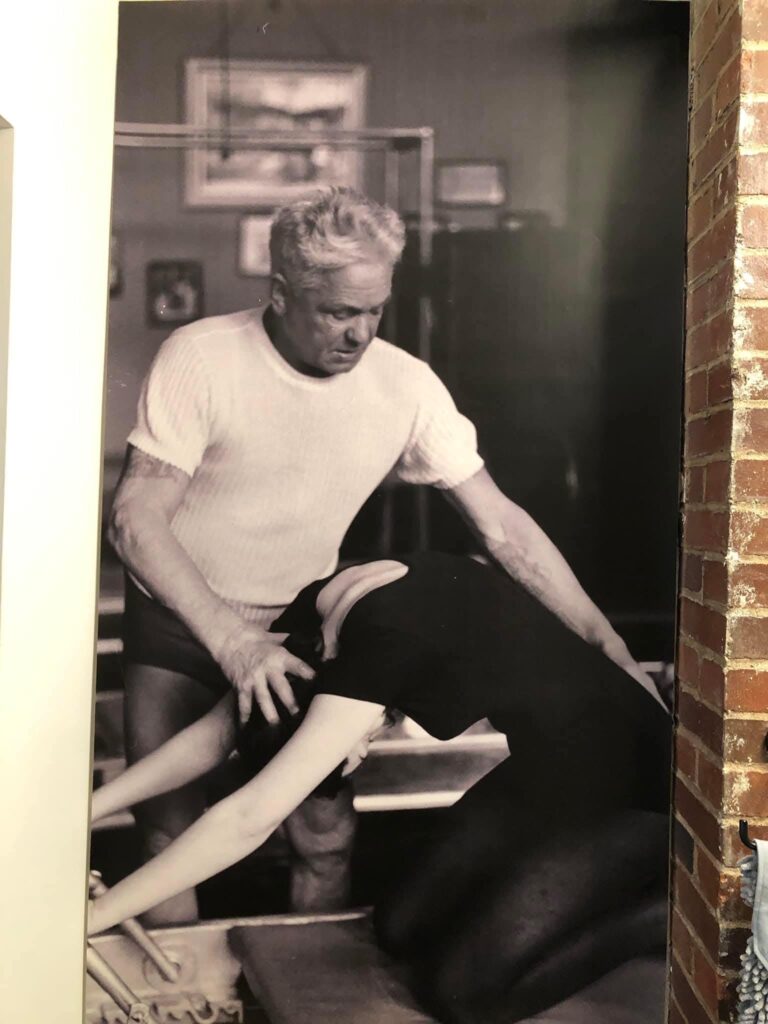
We now know that our “fascial matrix” body is a tension-compression elastic continuity from foot to head and hand that is a super conducting multifibrillar network, communicating and supporting the muscles, bones, internal organs, etc., and our nervous system co-regulation.
Mary Bowen once told me that Joseph Pilates did not know anyone’s name. We are aware that he was a genius, yet how do we shift from a biomechanical, pieces and parts approach of “teaching the body in front of us” to an updated, biointelligent, body as a living process awareness of “collaborating with the whole person”. In this way, I feel we have the opportunity to move beyond the right/wrong paradigm, to truly building on Joseph Pilates’ vision of teaching a “holistic” approach to Pilates.
We’ll look in Part Two of this article at the Power and Poise of Your Elastic Biotensegrity Body and a story about Romana’s personal practice. In the meantime, this is a wonderful testimonial I received from Pilates Teacher Trainer, April Jones, following a workshop:
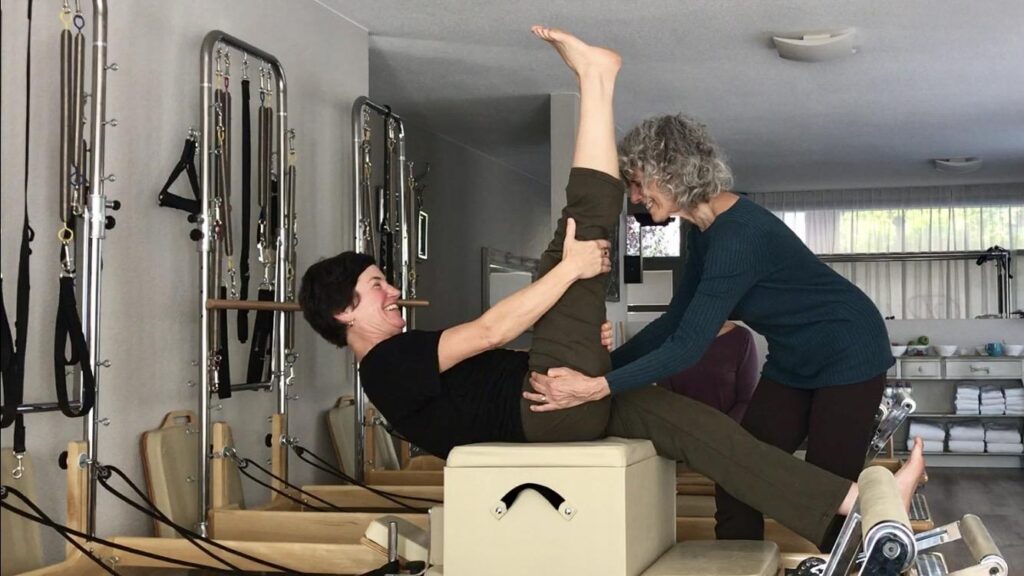
“I’ve never had a lesson where I felt that we created that moment together. I find it curious and powerful on both of our parts. I am still thinking about it because it was so unexpected. I liked how I could do my versions of the exercises and I felt strong and elastic doing the exercises with your support. The Tree on the Short Box never felt so good.”
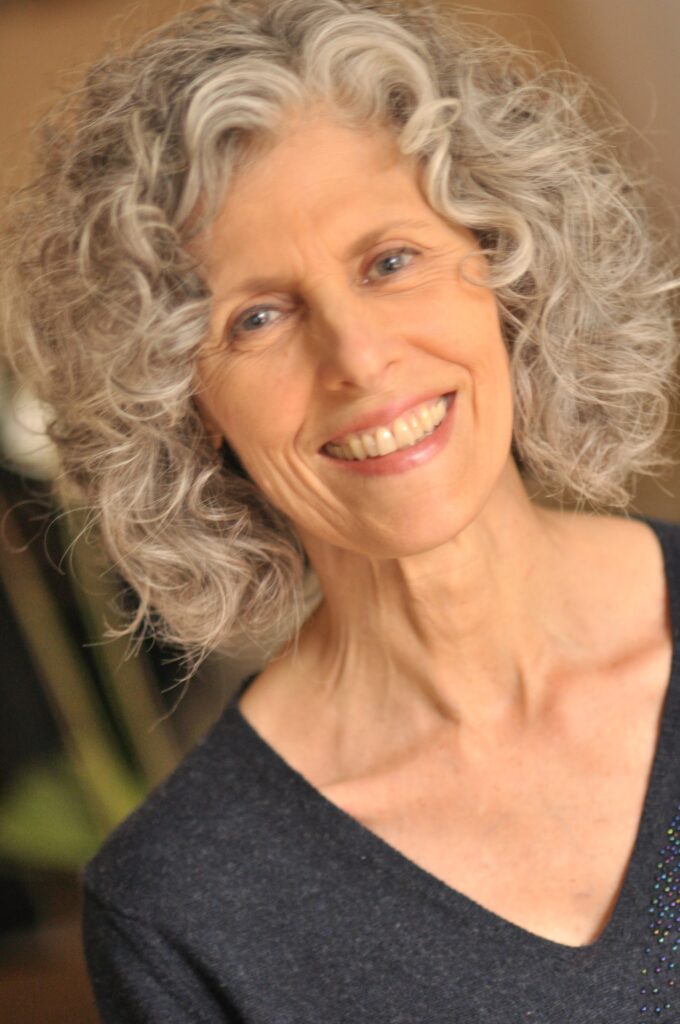
For over four decades, Wendy has been a holistic coach and embodied movement educator and mentor who is deeply inspired by the wisdom of the body, fascial matrix awareness, and personal transformation. Her vision has come to life through studies with pioneers in yoga, Pilates, the somatic arts and sciences, Rolf Structural Integration bodywork, embryology, embodied breathwork and perceptual ontology, which inspired her creation of the unique 3CoreConnections® Embodied Awareness.
As founder and former director for Pilates Center of Austin, est. in 1993, her embodied approach to our living architecture empowers practitioners of any movement or bodywork discipline to shift from a biomechanical, pieces and parts, body as machine to be trained and fixed approach to a biointelligent, body as a living process, whole person approach. This seismic shift evokes an awareness of wholehearted listening and fluid intelligence, cultivating one’s authentic voice and vision, through the portal of innate biointelligent wisdom.
Wendy is currently writing a book for Handspring Publishing on her embodied approach to movement and bodywork, scheduled for publication in February 2026, entitled: MOVING BEYOND CORE: A Somatic Exploration Through Whole Body Relationships.
A founding member of the Pilates Method Alliance (PMA), the Fascia Research Society and International Association of Structural Integrators, (IASI), she was on the original role delineation committee for the creation of the PMA exam, is an NCPT, a presenter for Pilates Anytime and FusionPilatesEDU , and honored to be a Second Generation Passing the Torch Mentor, Continuum Teacher and Registered Somatic Movement Educator (RSME).
Contact Information:
Wendy LeBlanc-Arbuckle
512-554-8560
Website: 3-core-connections