
Issue #452 – Wednesday, February 16, 2025
Beyond the Studio: Expanding Your Pilates Career Flexibility and Profitability
– Part 1 –
Stretching the Pilates Teaching Landscape
by Anne Bishop
One of the biggest myths in teaching Pilates is that in-person private lessons are the apex or pinnacle experience of teaching and learning Pilates.
Here are the common reasons I repeatedly hear that in-person private lessons are best:
- You can use touch cues
- You adapt the movement to the client’s individual needs
- You have all the equipment you need in the studio
- You can’t replace in-person connection
However, these strengths can become a crutch when overused, create rigidity in the Pilates learning experience, and cause roadblocks for teachers and students. On the learning level, the in-person strengths can keep your client needing you as the teacher forever and reduce your client’s ability to progress. Lionizing in-person studio teaching also reduces your career prospects.
As we all know, the world is experiencing repeated disruptions and complexities, which are not anticipated to wane. Examples include the COVID-19 pandemic and global climate events such as repeated hurricanes, floods, and fires. If you train your clients to exclusively value in-person Pilates appointments, your livelihood and ability to make a dependable career in Pilates may be hampered.
This is why I want to explore teachers working outside the in-person studio model, beyond just myself, and share their experiences, strengths, opportunities, and lessons learned.
Importantly, I never want the Pilates industry or teachers to be caught flat-footed again with something as challenging as the pandemic. Even Joseph Pilates famously taught Pilates outside in the snow, not just in a studio, and was deeply impacted by the pandemic of his day.
For this article, I interviewed Pilates and Gyrotonic Teachers. While listening to and learning from them, I was reminded how many innovative and bright embodied brains are embedded within our industry.
The Online Appointment + Membership Models
First, we’ll explore online appointment teaching and how it is used today to augment in-person teaching for client and teacher flexibility and enhanced revenue and creativity.
A few teachers exclusively taught online almost 5 years after the pandemic. Most teachers taught in person occasionally, but it was not the bulk of their income, bandwidth, or time.
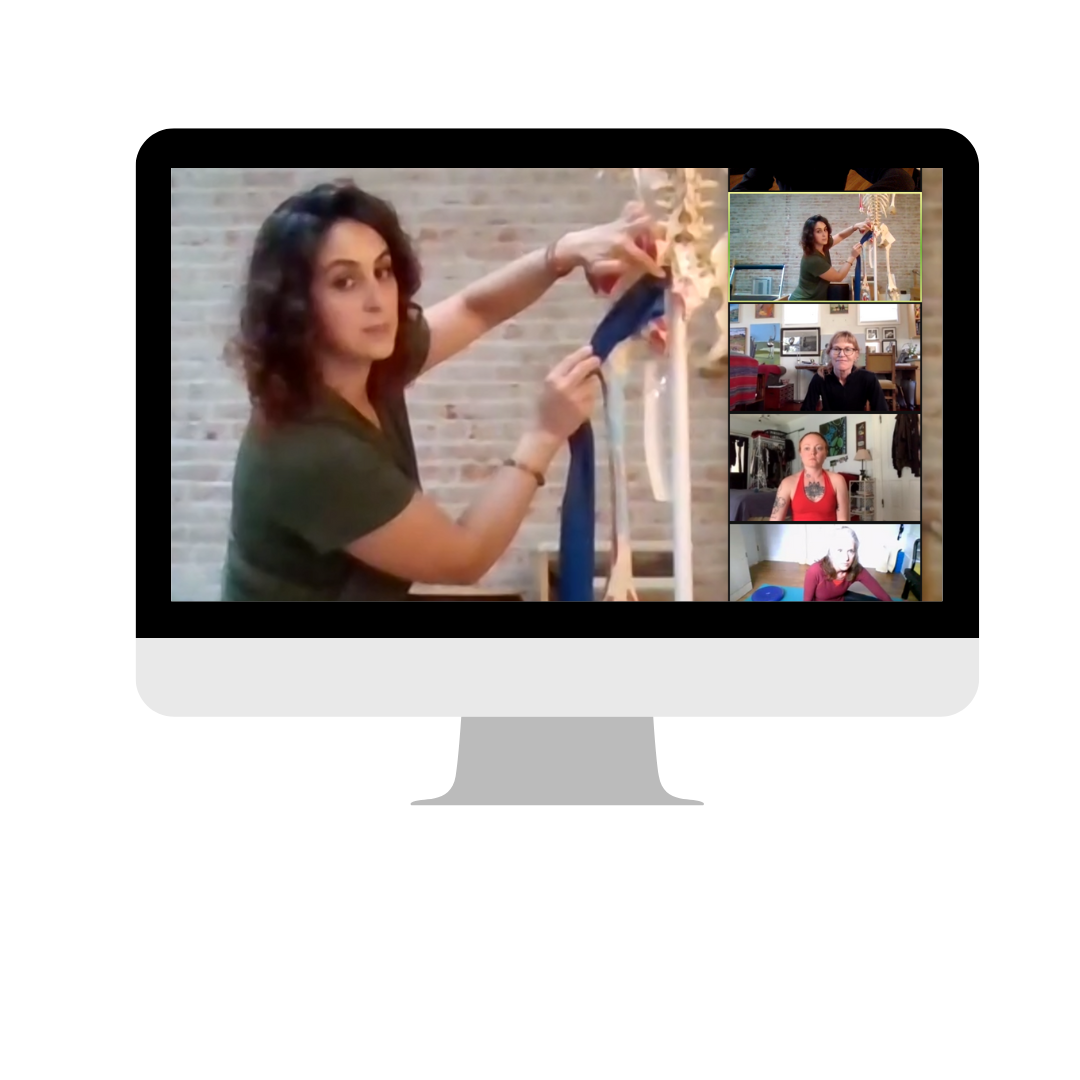
Aimee McDonald shared she loves teaching online as it allows her to balance her work with her role as she leads her dance company.
Aimee teaches students at all levels and focuses on pre-professional teachers and dancers. Considering Aimee’s clientele, she developed intensive private study sessions, which are 6-8 hours long, to support her students in finding strength and mobility beyond their perceived limits.
When she needs to focus on her dance company, she can lean into her online memberships (which offer Zoom classes and workshops) she created. This ability to immerse herself more within her dance and then return to a regular Pilates and Gyrotonic schedule reduces her burnout. Additionally, the online monthly recurring revenue sustains her when she focuses more on dance.
“I want to be teaching when I am 70!” She feels that online teaching supports her in that journey.
I also listened to Linda Zurak. Since the pandemic, Linda has taught almost 100% online. Like many of us, her students came online with her during the pandemic and stayed. New students find her through referrals and her website. Linda shared that working online allows more flexibility for her clients and her. Additionally, she reports that her clients must be more responsible for their practice and become more connected to their felt experience. Linda also appreciates that she can work with clients deeply and that the stress and cost of travel are reduced, and as a result, she saves time and money.
She finds that her stress levels subsided dramatically while teaching online and plans to continue.
Cecile Elias also transitioned to teaching online almost immediately during the pandemic. Most of her clients still work with her online for private appointments. Her clientele is a mix of 12 to 82 years old, and about a third to a half of them are teachers. She finds that the teachers like it so much because it allows them to keep up with their personal Pilates practice.
In-Depth Online Programming and Intensives
I also interviewed two other teachers who teach their work in formats beyond the in-studio appointment model. Kristen Luppenlatz Grech designed Kitchen Dancer, her signature 8-week online program, and a separate online Posture and Gait Assessment. These online learning opportunities are not the same as Pilates appointments, which might focus on progressive workouts. The former is a transformative experience, and the latter is assessment-based.
Arlene Corcoran specializes in in-person intensives, where clients come to her property for a week to learn about Pilates and Body Flossing ™ to get out of pain. During these intensives she may work with clients for multiple hours at a time on and off again through each day.
What connects these teachers is their enthusiasm for developing Pilates teaching outside the in-person studio appointment or class model and truly adapting to their client’s needs. Each teacher still offers some in-person appointments and delivers different teaching containers.
And this fits. Learning and teaching Pilates is not a one-size-fits-all approach. Teachers adjust their teaching methods depending on their goals. Different human beings need different methods of learning and teaching.
I am incredibly grateful to have learned more about alternative teaching strategies within the Pilates community.
The future of Pilates teaching is not confined to the four walls of a studio—it is as dynamic and adaptable as the human body itself. By embracing flexible models such as online appointments, memberships, and immersive intensives, teachers can create sustainable, profitable careers while offering clients diverse ways to engage with movement. These innovators remind us that Pilates is not just about where we teach, but how we empower students to move, learn, and grow. In Part 2, we’ll explore alternative business strategies that go beyond appointment-based teaching, ensuring that the Pilates profession remains both financially resilient and creatively fulfilling for years to come.
Anne C Bishop is co-founder of the Embodied Business Institute with Chantill Lopez. Anne is a licensed Pricing Overhaul® Coach, has owned a profitable Pilates Studio for 20 years, worked for Cast.org a curriculum design firm, and received her Master’s at Harvard University.