Issue #450
Wednesday, January 29, 2025
Why New Pilates Teachers Are Tempted by Instagram Exercises
(And What to Do Instead)
by Mara Sievers
Scrolling through Instagram, you might spot a cool move, performed by a super-fit instructor on a reformer, and think, “That looks awesome — I should teach that!”
But hold up! Before you toss that shiny new exercise into your next class, let’s pause for a second and talk about why that might not be the best idea.
The Temptation: Fear of Boring Your Students
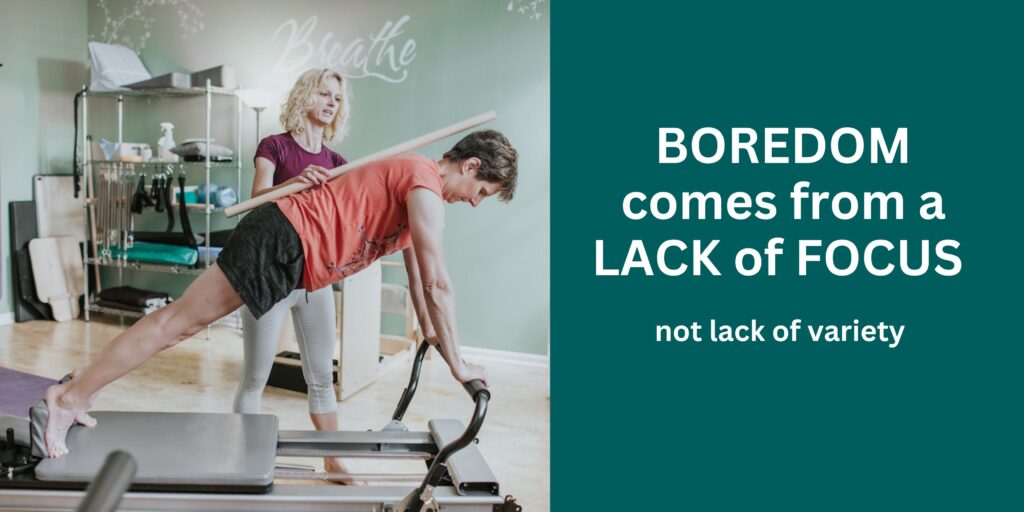
As a new teacher, it’s normal to worry about keeping your clients engaged. You want them to stay interested and keep coming back, right? You might even fear they’re getting bored. So, naturally, you start thinking you need to constantly switch things up with new exercises.
But here’s the thing: your students don’t need more variety — they need more depth.
What makes an exercise effective isn’t how “new” it is, but how well it’s taught. When you pull an exercise from Instagram without fully understanding it, you’re teaching at surface level. It might look cool, but it won’t give your clients the results that keep them coming back.
The Problem: Superficial Teaching
Teaching an exercise you found on Instagram without fully understanding its purpose and the specific movement skills required for it can lead to a superficial experience for your clients.
It’s not enough to see an exercise and try it once before bringing it to your class. You need to understand why you’re teaching it, who would benefit from it, and how it fits into your students’ overall progress.
Many new teachers fall into the trap of thinking more variety equals better classes. But the real issue is that, early on, you’re still developing the ability to get the most out of each exercise you teach. And that’s okay! Building your teaching skills takes time.
The Solution (Hint: It’s Easier Than You Think!)
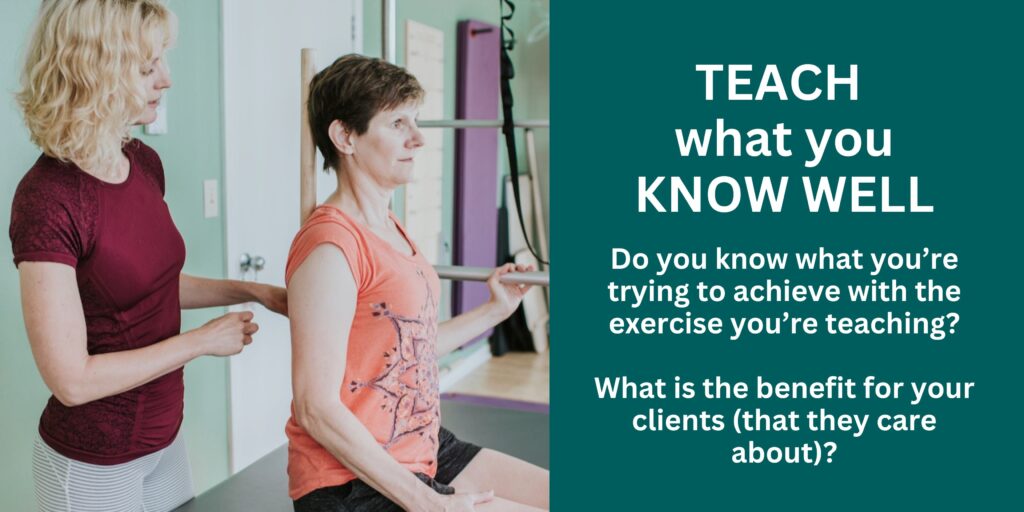
Instead of constantly chasing new exercises, here’s a little secret: stick with what you know.
That’s right. Focus on the moves you’ve already mastered and teach them with purpose. The more you repeat a specific exercise, the better you’ll become at teaching it — and the better your students will get at doing it. Over time, you’ll discover new layers of muscle recruitment, new cues, and deeper ways to teach.
And if you want to keep things fresh, you don’t need to reinvent the wheel. Just add a small variation. For example, if you’re teaching a kneeling arm series, adjust the spring tension, change the movement angle or add rotation. It’s the same exercise, but with a twist that keeps it interesting — without compromising your confidence or your clients’ progress.
Why This Works
When you teach what you know, you show up with confidence. You know the setup, the alignment, and the cues that produce results. Your students will feel that confidence, and that’s when the real magic happens.
Plus, let’s be real — this saves you tons of time. No more spending hours prepping new sequences just to feel like you’re offering something “new.” Your students will benefit more from your expertise on familiar exercises than from a constant parade of novelty.
The Real Challenge: Improving Client Form
Another reason to avoid relying on new Instagram exercises is that it won’t solve the deeper issue of helping your clients improve their form.
If your students are struggling with alignment, introducing a new exercise won’t fix it. Instead, focus on teaching them how to engage their core, lengthen their spine, and maintain proper alignment in exercises they already know. This is where real growth happens — for both you and your students.
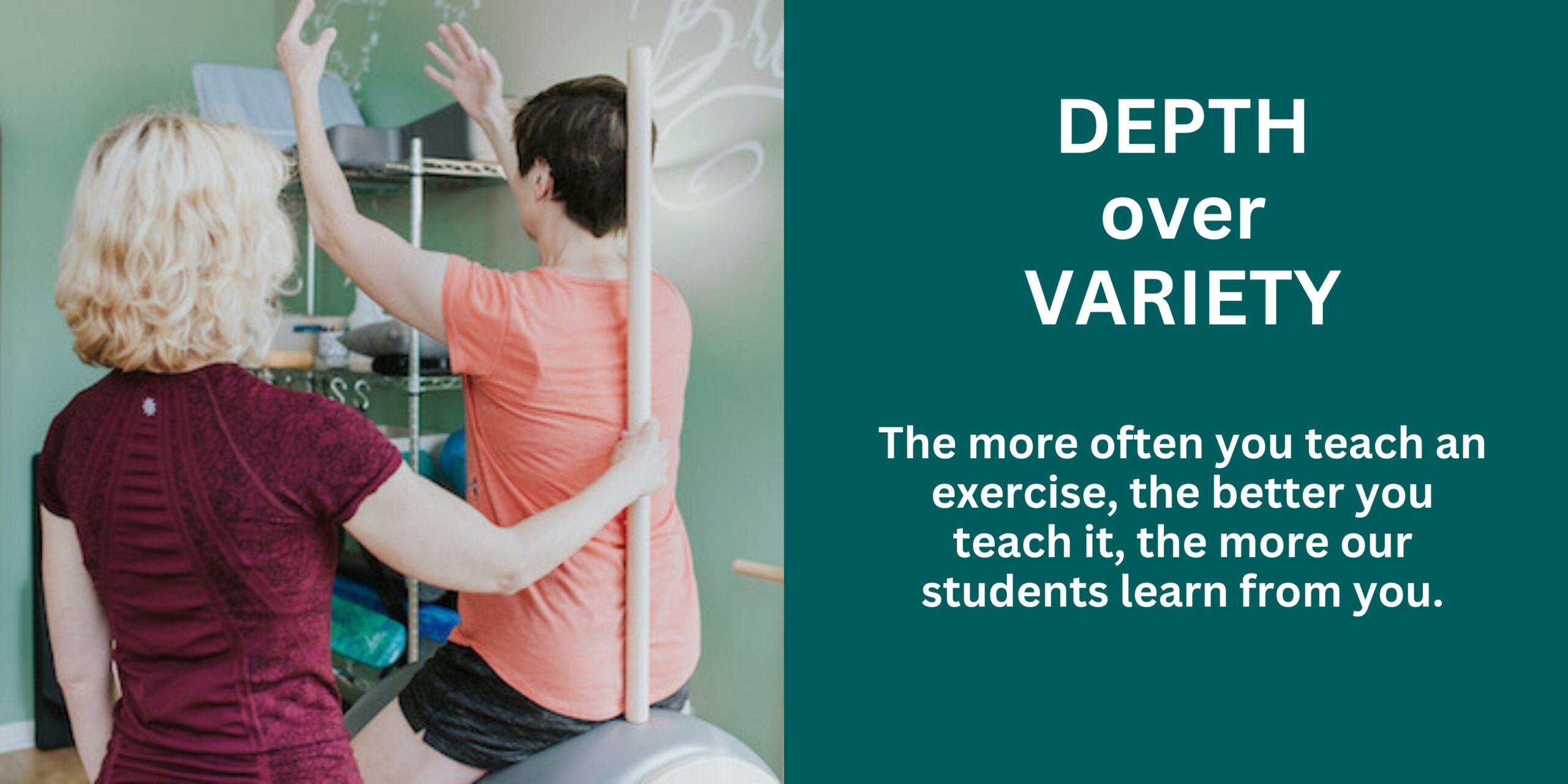
The Bottom Line: Depth Over Variety
Your goal isn’t to overwhelm your clients with endless variety. It’s to help them master the exercises, understand their bodies, and progress over time. By sticking to exercises you know and teaching them with more depth, both you and your clients will see better results.
So, the next time you’re tempted to bring an Instagram exercise into your class, ask yourself:
- What’s the purpose of this exercise?
- Would a different move I already know and teach well be equally effective?
By focusing on what you know and teaching it well, you’ll build your confidence as a teacher — and your clients will reap the benefits.