
Issue #441
Wednesday, October 16, 2024
Pilates 101: Teaching Contrology as a College Course
Part 3: Teaching the Teacher
by Cathy Pagani
Photographs courtesy of The University of Alabama
If you want to learn something, read about it.
If you want to understand something, write about it.
If you want to master something, teach it.
Attributed to Harbhajan Singh, also known as Yogi Bhajan
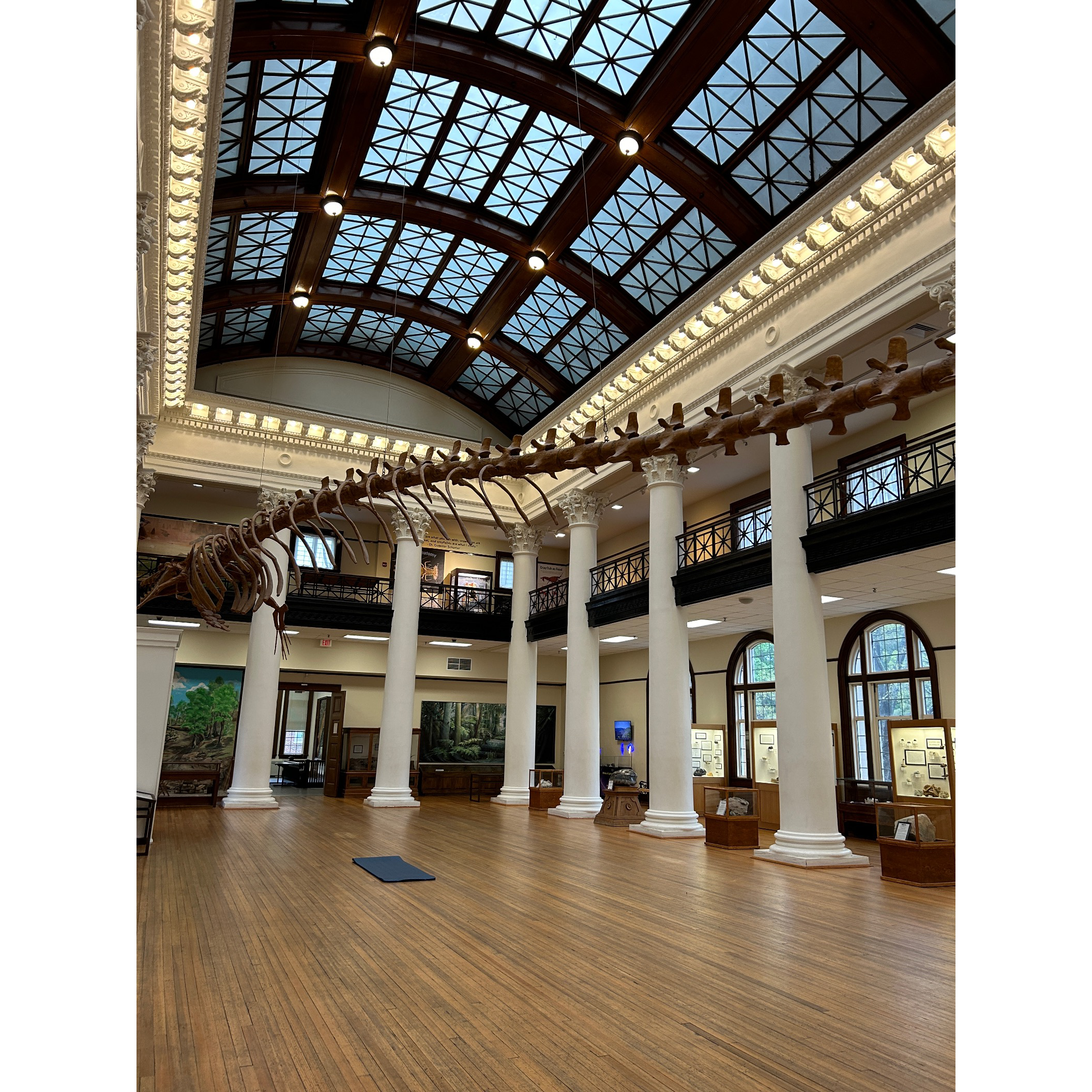
In Parts 1 and 2 of this series, I discussed the challenges of developing a 15-week college-level course in intermediate classical mat Pilates and the impact that this course had on the students. Here, in Part 3, I look at the impact that teaching this course had on me as a Pilates instructor. What did I learn? How did teaching the course change me?
In agreeing to teach this class, I had fully expected that I would strengthen my knowledge and understanding of Pilates fundamentals, including history and philosophy, anatomy and physiology, and, of course, the intermediate-level mat exercises; after all, I had to ensure that I was well prepared for each and every class. I reviewed notes from my teacher-training, carefully read and re-read a variety of publications on Pilates, and memorized exercise lists. I needed to make sure I knew my stuff. What I had not expected, however, was how quickly I began to see the class through the eyes of the students. What did they want to know? What topics interested them? What questions beyond the basics might they ask? How can they see the relevance and application of Pilates in everyday activities, like walking to class or sitting at a computer? And what are the “cool bits” that would make them would want to rush home after class to share with their friends? Their natural curiosity encouraged me to be curious, too.
Creating a Road Map and Driving Down That Road
My responsibilities to the students began long before I stepped foot in the studio. The first task, and what I would come to appreciate as essential to the course’s success (and maintaining my sanity), was developing a logical, reasonable, and thoughtful structure for the course that served as a road map for the semester: we always knew where we had been and where we were going. This was the foundation on which everything was built. I’m not new to a university classroom: I have taught for more than 30 years and have created countless syllabi. I understand the university’s expectations in terms of general syllabus requirements, grading and assessments, and what student learning outcomes should cover. These items – well articulated by our university’s policies – turned out to be the easy part. The nuts and bolts of each class session, which were one hour and forty-five minutes long, proved to be a challenge and would push me to explore creative ways to engage the students while staying true to Joe and Clara Pilates’ legacy. And I knew I needed to do it well. The words of physics professor Richard Feynman weighed heavily on me: “The ultimate test of your knowledge is your capacity to convey it to another.”
This is what I learned:
Students love stories, and effective storytelling can be powerful way of conveying information. The history of Pilates is a compelling tale of adventure, risk-taking, vision, creativity, and perseverance. I augmented the traditional narratives with material I gathered from books and articles on such subjects as the body culture movement in Europe in the nineteenth century, Mr. Pilates’ contemporaries in the fields of exercise and body building, and the development of the exercise equipment to place the story of Pilates within the large and complex international context. The information is fascinating. Not only did this hold the students’ attention, but also reminded them that nothing occurs in isolation. As one student wrote, “The deep history of Pilates honestly surprised me, as I don’t typically think of forms of exercise as something with rich histories, but I think it makes me appreciate Pilates even more.” The preparation was substantial but was well worth the effort as it also expanded my own knowledge base, too.
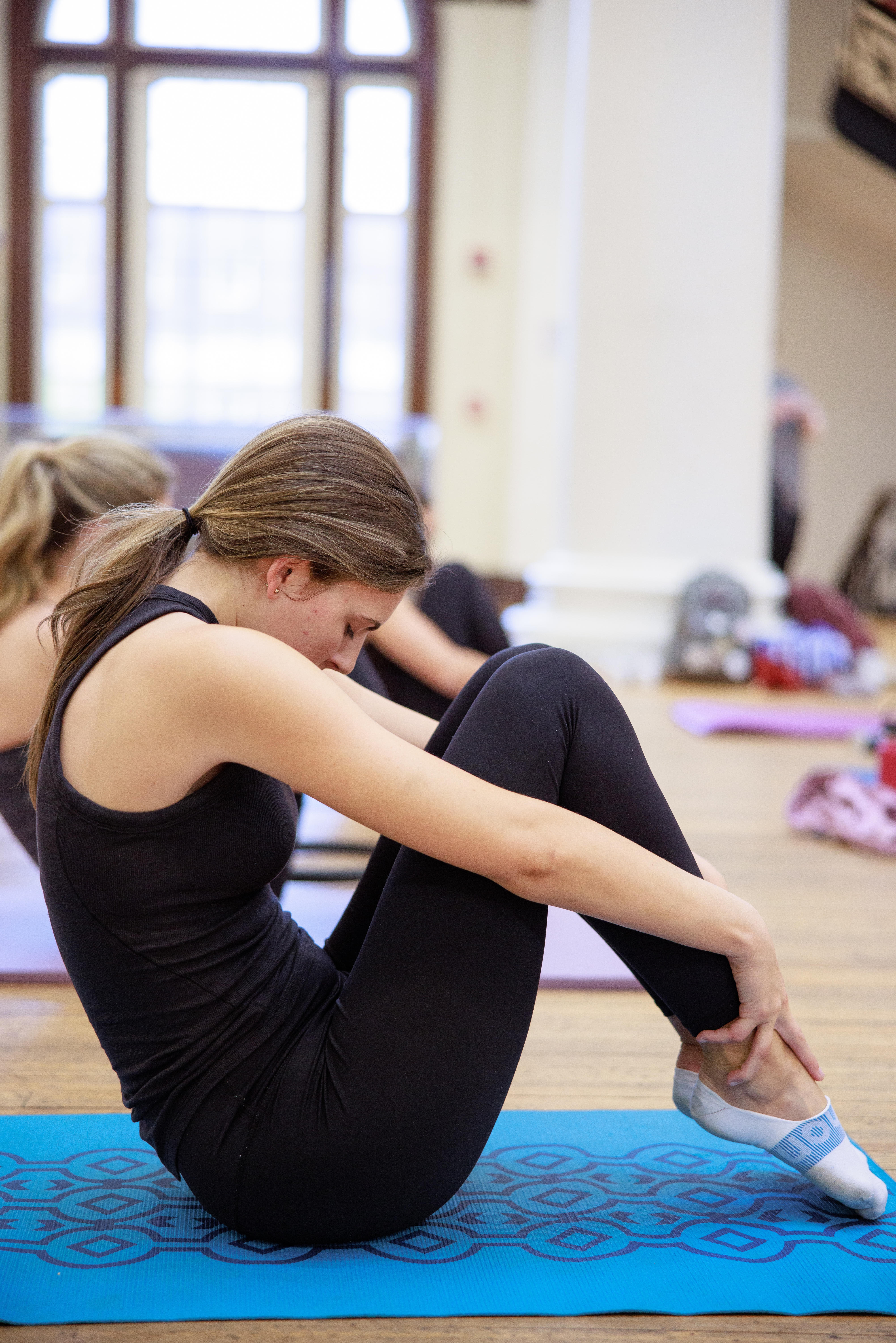
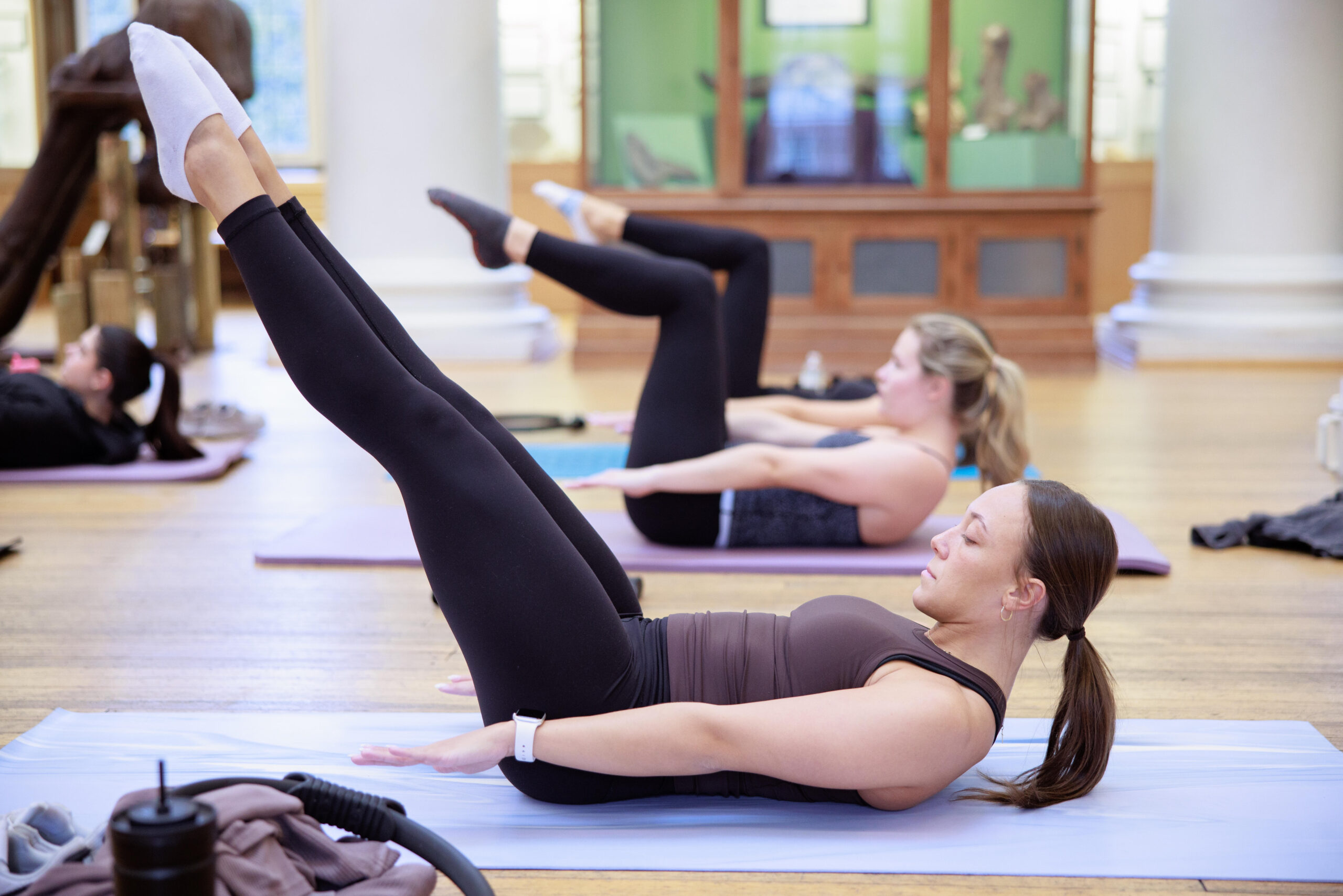
The students seemed to develop a stronger grasp of the course components (history and philosophy of Pilates, anatomy and physiology, the mat exercises, and skill drills) when I reinforced the connections between items rather than treat them as separate areas. I did this through a technique that I often use in my teaching that I call “breadcrumbing.” This is nothing new: students are led down a path step by step toward goal as though they are following a trail of breadcrumbs. For this course, however, these “breadcrumbs” did not focus on a single subject: they were an integration of strength drills and lecture material with the exercises that built on each other and allowed me to the opportunity to reinforce concepts. It was instead a breadcrumb path made of intertwined ribbons. While there is not time to cover the specifics in this article, I found that these sessions provided students with little “aha moments” of understanding, insight, and discovery that gave them a great sense of satisfaction, boosted their confidence, and allowed for enhanced learning. Not only could they do Teaser at the end of the semester (they all could!), but – importantly – they knew why they could do it, how they got there, and how their practice was a part of Mr. Pilates’ vision.
Teaching the Teacher
From a practical standpoint, teaching Pilates 101 allowed me to dig deeper into the history of Pilates, see the connections between exercises more clearly, and refine my cueing. In this area, I learned a lot. To quote Richard Feynman once more, “If you want to master something, teach it. The more you teach, the better you learn. Teaching is a powerful tool for learning.”
However, beyond the hands-on aspects of teaching, there were two important things I learned that will forever impact how I teach. The first is that in the same way that I challenge my students, I should challenge myself. Every day, the students showed me how to be resilient, inquisitive, curious, and open to challenges. This is how I need to approach my teaching every time I step into the studio. The other important take-away is that courses like this one serve an important purpose in a university curriculum. These are not simply “activity classes,” but a way to “profoundly impact students’ lives [by] encompassing physical activity, mental health, and emotional well-being,” as one student put it. Teaching “The Method” in a non-traditional environment to a non-traditional audience has value and is well worth the challenges for the teacher. I would love to see more universities integrate classes like this into their curricula. They are low cost and high impact – and the benefits go far beyond the classroom.
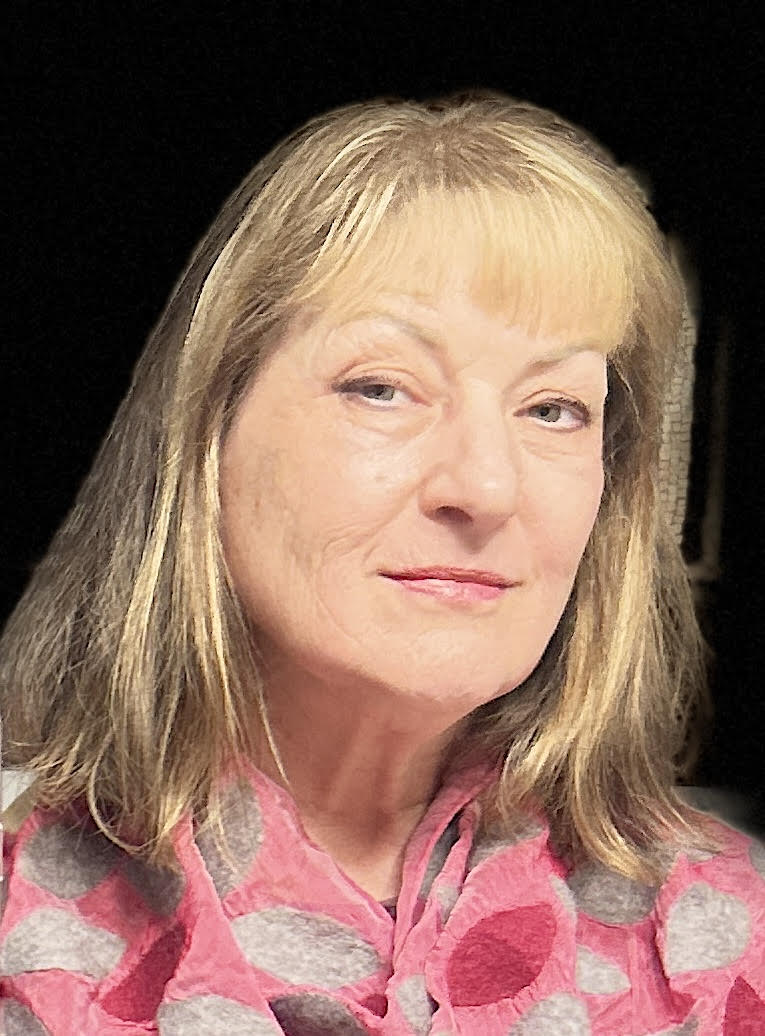
A triathlete who competed at national and international levels, Catherine began her classical Pilates journey after a running accident resulted in a total hip replacement. During her rehabilitation, she discovered the power of Pilates in helping her get back on her feet. In fact, in many ways, she was stronger than she was before her injury. She realized, “I would have been a much better athlete had I known about Pilates 20 years ago!” It was then that she decided to pursue teacher training so that she could work with others to help them achieve optimum strength, awareness of movement, and flexibility. She is passionate about spreading the word on how developing a regular practice in classical Pilates is a life-changing and life-long pursuit — and it can be embraced by everyone.
Catherine recently retired as a professor of Asian art history and associate dean of the Graduate School at The University of Alabama and now teaches part-time for the university’s department of kinesiology, where she offers classes in indoor cycling and Pilates for university credit. She is a graduate of Streamline Pilates’ 450-hour intermediate-level teacher training program. She has been a certified Spinning® instructor for 24 years and a certified Personal Trainer for the past 20 years. In addition, she holds a Ph.D. in East Asian Studies from the University of Toronto.