
Issue #439 – Wednesday, September 25, 2024
Key Influences That Affected Pilates
by Amy Alpers
I’m asked constantly – all around the world – how and why has Pilates changed? There are many solid reasons. Let’s take a look at a few key ones.
It wasn’t until after the word “Pilates” was deemed generic (Oct. 2000), that Pilates, as an official industry, truly launched. Except for a few small locations scattered around the world, the idea of Pilates as we know it today, simply didn’t exist. It was made up of a select, somewhat secret, exclusive community of diehard teachers and practitioners. “If you knew, you knew”. IYKYN. As the renowned, ubiquitous, world-spanning industry we see it as today, it’s in fact a phenomenon of the 21st Century alone.
Joseph Pilates died in 1967, and Clara, his wife/partner died in 1977. By all accounts Joseph Pilates died disappointed and frustrated that his work hadn’t caught on as he’d hoped. There were a small handful of his students teaching his work elsewhere, while Romana Kryzanowska assumed the directorship of his studio in NYC. The people who practiced his work, or even knew of or about Pilates, were still few and far between.
I began my Pilates journey at the NYC studio in 1987. It was small, local, run down and not very stable as a business. In fact, it nearly closed and disappeared one day in 1989. Romana then re-opened at Drago’s Gym in NYC, and it began to build some fresh energy. But Pilates still struggled through the 1990’s, hindered even further by the lawsuit about the trademark.
Then, in 2001, after the trademark was lost, the industry began its big bang moment. It started to explode and expand, and to formulate itself into a true profession. However, the word “Pilates” was now generic, and so it could be, and was, used by anyone to refer to just about anything. So that’s also when the method really began to change and evolve into “anything goes” Pilates.
One of the major influences that affected Pilates early on, even during Joe’s life, was dance. Dancers flocked to his studio in comparatively large numbers, more so than many other types of clients. I can only imagine that Mr. Pilates was a bit flummoxed by this. He was a short, strong, stocky, muscular man. A boxer, not a dancer. His method, created from his own mind/body, naturally presumes that there is substantial muscle mass and strength – especially upper body – on the body to harness. I have little doubt that he expected his work to catch on more with strong men, even prize fighters, more than with tiny, flexible – mostly female – dancers.
And yet in the end, it was primarily those tiny, hyper-flexible female dancers that became the main torch bearers after his death – Carola Trier, Kathy Grant, Eve Gentry and Romana Kryzanowska. To this day, the industry still struggles to attract men. It developed a reputation for being for women, especially dancers. And as something that focuses more on flexibility than strength. Much of its power, real strength and muscle building component was lost. The clientele, much to Joe’s disappointment, I can only imagine, became almost only women.
Consequently, as Pilates exploded in this century, another powerful influence stepped in. Due to injuries occurring – I think often from the lack of chest, back and shoulder strength in the mostly female market – the medical industry (i.e. physical therapists, liability insurance, and litigious types, etc.) started infiltrating. It determined that Pilates exercises were dangerous and “contraindicated” in many situations. Teachers became extra careful and fearful, and started modifying by limiting range of motion and over stabilizing body parts to protect. The concepts of fascial integration and bio-tensegrity weren’t yet a “thing” (i.e. popular, widely understood, agreed upon) so the method was picked apart and dissected, losing its essential “whole body integrity” principle that ultimately is the entire point. This is still a huge issue today.
Other major influences include the advent of teacher training programs. This exploded in the 2000s. Organizing, codifying and solidifying his work into manageable, bite-size, affordable, i.e. sellable, bits flooded the industry with 1000s of “teachers” many of whom had little to no experience exploring the original work in their own bodies for deep understanding – leading to more injuries and widespread lack of true understanding of what Pilates “is”. In fact, one can still get a “certification” through a single weekend-long online course. The National Pilates Certification Program is working hard to educate the marketplace about this issue.
Along with training programs came an explosion of equipment manufacturers. In the 1990s there were only a handful of equipment builders, mostly individuals. Current Concepts in CA started selling Pilates equipment in the 1970s, but Gratz wasn’t yet manufacturing for the general public on any sizeable level until the 2000s. As companies popped up, merged and split, countless changes in the equipment occurred. Reformers, Cadillacs and Chairs grew in size, risers and safety mechanisms were added, variations in foot bar and headrest height as well as gear changes were made, not to mention the truly amazing array of spring choices that appeared. This has had a profound impact on Pilates.
Another concept that affected Pilates was the model in which it was offered to the public. Joseph’s studio used an “open-gym” style in which clients did their own workouts while roving teachers offered support as needed. Romana continued this model as well. When we opened our studio in 1990, however, we decided we wanted to teach more directly to our clients, so we offered the hour-long “private session/small class” model. This is used widely today. Both have pros and cons, and the choice depends on your personal style as a teacher, or your specific marketplace requirements. Filling a full hour for a beginning class, however, sometimes required some added material, so balls, therabands, rollers, etc. became common extras. The class model in general lead to many variations, modifications, and “pre-Pilates” type exercises being devised.
As you can see, numerous and diverse types of influences have affected the Pilates method over the years. It’s essentially a giant game of telephone – who heard/learned it from whom? When? Who “remembered” being taught it how and by whom? Everyone hears, feels, sees, learns, understands, interprets, and remembers in varied ways. And also, teachers themselves evolve and change over the years. Even Romana taught things differently in the late 90’s and early 2000s, than she did in the 80’s. And memories fade and get colored by other input over time.
And never, in the history of the world, let alone Pilates, has there been so much overwhelming information at our fingertips. With the internet we have access to massive amounts of data on every conceivable topic every second of the day, right in the palm of our hands.
Luckily for all of us Pilates devotees, access to original films and photos of Joseph himself teaching, is becoming more available. We, at The Pilates Center, have chosen to rely on the truth shown in the original archival films and photos, when in doubt. Joe’s true intention is clear there. He had an uncanny ability to understand the human body and to develop a complete system of movement that stays powerful and true today despite all the multitude of influences that have come and gone.
Can you think of even more influences that have affected the Pilates method over the years? I’d love to hear them. I also wonder if Pilates would be as huge as it is today, if not for some of these influences. What do you think?
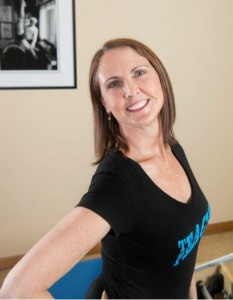
Amy Taylor Alpers co-founded The Pilates Center (TPC) and The Pilates Center Teacher Training Program (TPCTTP) over 20 years ago in Boulder, Colorado. When not traveling the world to teach both foundational and graduate level Pilates teacher education she remains part of the core faculty for TPCTTP, mentors advanced teachers, teaches classes and sees clients. In addition to teaching TPC sponsored workshops, Amy has presented numerous times at the Pilates Method Alliance Annual Meeting, Balanced Body’s Pilates on Tour and Passing the Torch. In 2013, Amy presented at the Shared Traditions Conference for Fletcher Pilates and will present at The Pilates Roundtable.
Amy was born in Youngstown, Ohio where she began classical ballet at age two.
She attended The Juilliard School for Dance, danced with the Garden State Ballet in New Jersey, and received a B.A. in Dance and a M.A. in Dance History from New York University. In addition, Amy taught ballet at various dance schools in New York City for ten years before launching her Pilates career.
Both Amy and her sister Rachel studied Pilates under the direct tutelage of Romana Kryzanowska at the original Pilates Studio in New York City. They received their Pilates teaching certificate from there in July of 1989. In 1990, after moving to Boulder, Colorado, Amy and Rachel founded The Pilates Center. The sisters then created and established The Pilates Center Teacher Training Program in 1991. The school has since expanded to include an Intermediate Program, Advanced Program, Bridge Program, Master’s Program, and a Mentorship Program. In addition, TPC now has “Licensed” and “Host” studios established all around the world.
Amy and her sister wrote The Everything Pilates Book, published in 2002. She was a founding board member of the PMA and sat on the board that created the PMA Certification Exam. Recently she has also had the honor of filming classes and workshops for online organizations such as Pilates Anytime and Pilates On Demand.
In 2011, Amy, her sister Rachel, and Ken Endelman of Balanced Body, developed CenterLine – a line of equipment designed for classical Pilates and based upon the specifications pioneered by Joseph Pilates.