
Issue #473 – Wednesday, February 26, 2025
What Veteran Teachers Reveal About Embodied Pedagogy:
The Real Solution to ‘Online Training Dilutes the Craft’
by Anne Bishop
Over the past month, I gathered responses from 29 master teachers across six countries—including New Zealand, the United States, Australia, Mexico, Brazil, and Canada—with a combined 475+ years of experience in teaching, mentoring, and training teachers. These educators represented 32 different teacher-training programs, including legacy institutions like Romana’s Pilates International, STOTT PILATES®, and Polestar Pilates®, as well as independent training schools with National Certified Pilates Teacher (NCPT) status.
For years, a quiet consensus shaped our field: the belief that online training and shorter programs watered down quality and produced under-prepared instructors.
The story goes like this…without hands-on guidance, new teachers can’t feel what they’re meant to teach. Online flattens nuance, and “weekend certifications” skim the surface. The result? An industry nostalgic for the pre-digital studio apprenticeship and long studio days of embodied learning.
There’s some truth to that nostalgia. Some online or fast-track programs are shallow. Teacher trainees feel isolated in online studios, and conveying the subtleties of touch and feeling through screens is more challenging.
When I began this project, I expected a familiar consensus: that online training still couldn’t be trusted. I assumed most veteran educators would call for a return to the studio and the embodiment of hands-on apprenticeship. But that wasn’t what I found. Across the responses, there was no broad rejection of online education itself. What teachers still distrust are short trainings or online-only programs that lack live mentorship, awareness of felt sense, and depth.
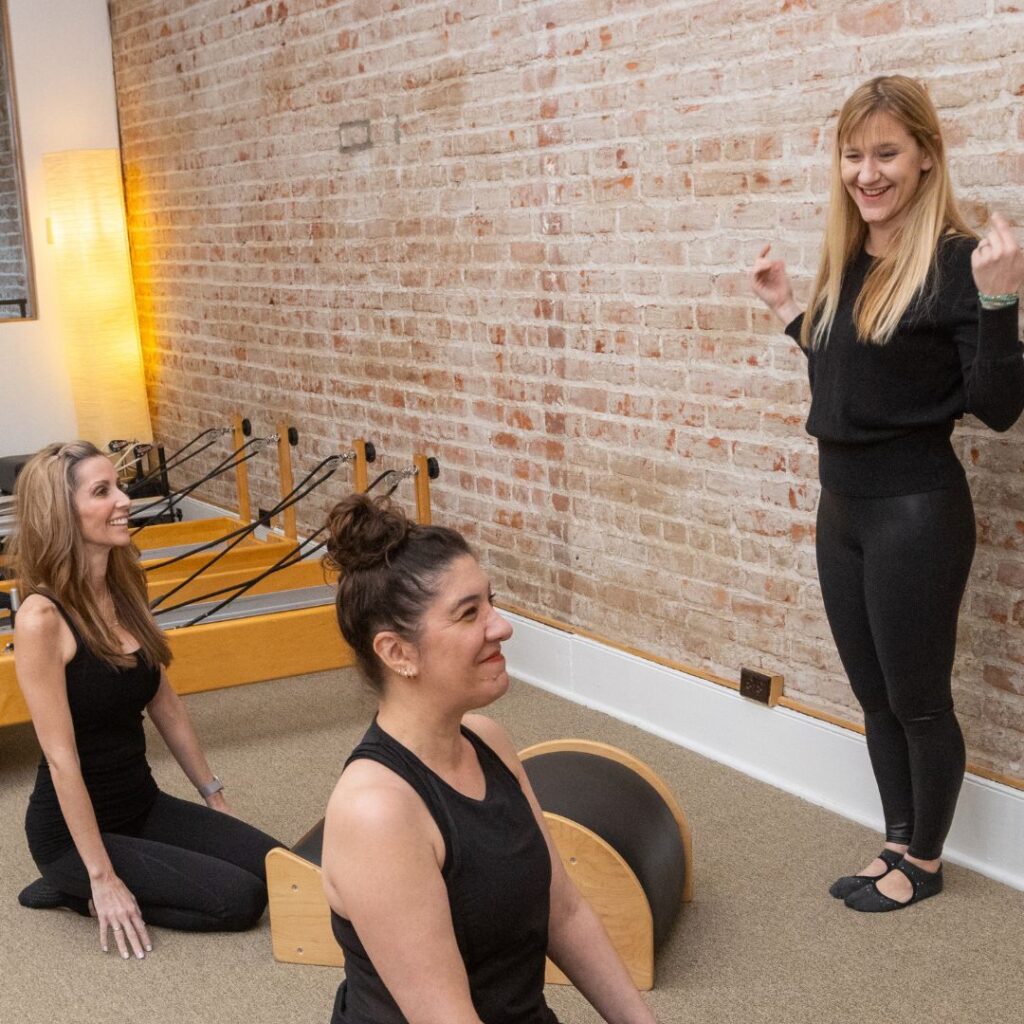
What emerged is an approach I call embodied pedagogy, which integrates adult-learning science, body awareness, and motor control, distilled from the lived experiences of veteran Teacher Trainers across divergent modalities.
Hybrid models that combine asynchronous study with guided, live weekends earn near-universal support. The real divide isn’t online versus in-person—it’s depth versus speed, feeling versus choreography.
What this insight reveals is that it’s not a battle between online and offline. Teachers aren’t failing because they learned online; they’re failing because no one taught them how adults actually learn complex embodied work. And our nostalgia for the old in-studio days grounds our belief that it can only happen with comprehensive in-person programs.
Online learning, when grounded in adult-learning science, felt sense, and community, can strengthen embodiment rather than replace it. But that only happens when we design with intention. The real crisis isn’t digital or even short training; it’s teaching the depth of embodiment.
We can’t take what worked in hours of in-studio practice and expect online spaces to deliver without redesign. Traditionally, trainees learned, practiced, observed, taught, and tested—and at its core, they were learning felt sense in their own bodies.
As Monika Kenez observed, “Students struggle to integrate anatomy, movement science, and principles into live teaching.” That’s not an online or short-course flaw; it goes deeper. We must look at the whole design.
Veronique Breen reminded us, “We all need different cues, support, and explanations. That takes time in practice and application.” That “time” doesn’t just mean more hours in a studio; it means structured embodied pedagogy—for felt-sense feedback, reflection, and knowing why you provide an exercise.
Just learning by “osmosis” and watching in a studio is not the solution. Online or short courses are not dilution; poor teaching that lacks embodied pedagogy is.
Here’s an example of what I mean.
When used effectively, digital tools enable us to flip the classroom. A flipped-classroom model comes from K–12 through postgraduate education. The idea is that students interact with the material first (online), then come to class to work through and apply this information.
This works beautifully for teacher trainings. You can use a flipped-classroom model by encouraging your students to watch the exercise before coming to the studio, allowing in-person time to be spent more on the mat or apparatus, practicing instead of watching a teacher demonstrate.
This model allows students to watch, use mental imagery, or practice at home before class. We know the brain consolidates more knowledge with sleep (Walker & Stickgold, 2005) and time. A flipped-classroom model allows an expansion of time. Encouraging trainees to watch, practice, and awaken their felt sense beforehand fosters better learning than cramming all the knowledge into weekend in-studio sessions only.
This example demonstrates how online and short weekend modules are not the problem. Instead, they can provide solutions to enhance embodied pedagogy—when added thoughtfully.
Creating community is vital. As Abbey Parsons from Polestar Pilates NZ put it, “Post-course mentoring allows a teacher to consolidate knowledge alongside an experienced educator—creating continuity and consistency in the method.”
That’s what community looks like in practice: not just camaraderie, but a shared container for integration. Several educators described the need for spaces for reflection, experimentation, and feedback—living laboratories where embodied knowledge matures.
This is why embodied pedagogy matters. It moves beyond rote choreography toward helping teachers understand how adults actually learn through movement and how cognition, attention, and sensory feedback shape skill acquisition.
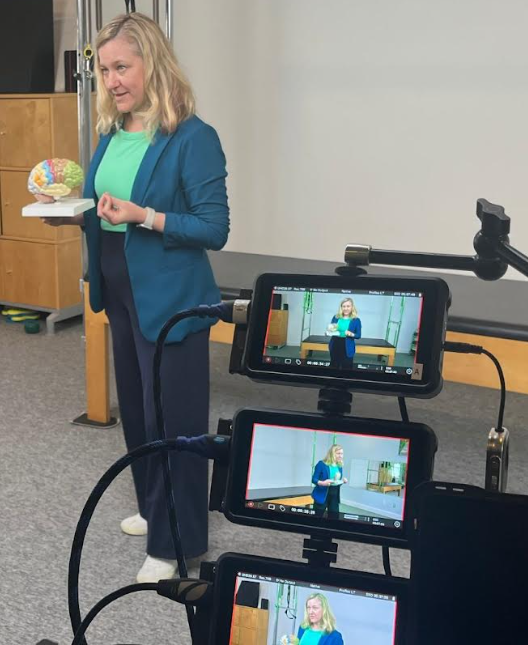
When teacher trainings are designed with embodied pedagogy in mind, it becomes a form of applied learning science. Online, hybrid, or in-studio, the goal is the same: to help teachers connect what they know in theory to what they can sense, feel, and ultimately cue in others.
Here’s what I’ve distilled from these veteran Teacher Trainers and Mentors:
We’re not just teaching people to teach exercises. We’re teaching them to sense, translate, and adapt—and that requires embodied pedagogy: a design philosophy that honors both the biology of learning and the diversity of learners.
And when we understand that, the data, the science, and the lived experience all converge: adults learn movement through felt sense, reflection, and community—not through bandwidth or screen time. What dilutes quality isn’t technology; it’s the poor adaptation of old-school in-studio mentorships into one-size-fits-all formats driven by economics.
The solution is simple, though not easy: stop blaming tech or short trainings and focus on teaching through embodied pedagogy. Programs that do this, online or offline, are already producing teachers who not only know the work but can translate it. As Veronique Breen put it, “Connecting the dots—knowing more why and where things come from—helps teachers understand what they are really getting into.”
If you’ve ever led a teacher training, mentored an apprentice, or wondered how to raise the bar for our industry, I’d love to hear from you. The conversation doesn’t end here; it begins with your lived experience.
I’m collecting voices through the Teacher Training and Mentorship Questionnaire to map what’s working, what’s missing, and what’s next. Together, we can design the next evolution of teacher education—rooted in embodied pedagogy, adult learning, and reflection—and deepen the integrity of our craft.
Take the Teacher Training & Mentorship Questionnaire
https://forms.gle/jMtMVrRoRfUX8xry5
Walker, M. P., & Stickgold, R. (2006).
Sleep, memory, and plasticity. Annual Review of Psychology, 57, 139–166.

Anne C Bishop is co-founder of the Embodied Business Institute with Chantill Lopez. Anne is a licensed Pricing Overhaul® Coach, has owned a profitable Pilates Studio for 20 years, worked for Cast.org a curriculum design firm, and received her Master’s at Harvard University.